Latin dance encompasses a vibrant spectrum of rhythmic movement styles that have captivated dancers across the United States and worldwide. From the competitive precision of ballroom Latin dances to the cultural richness of folkloric traditions, understanding the various types of Latin dance opens doors to both artistic expression and social connection. This comprehensive guide explores traditional and contemporary Latin dance forms, their unique characteristics, and how you can begin your journey into this passionate world of movement in 2026.
The Five Latin Ballroom Dances
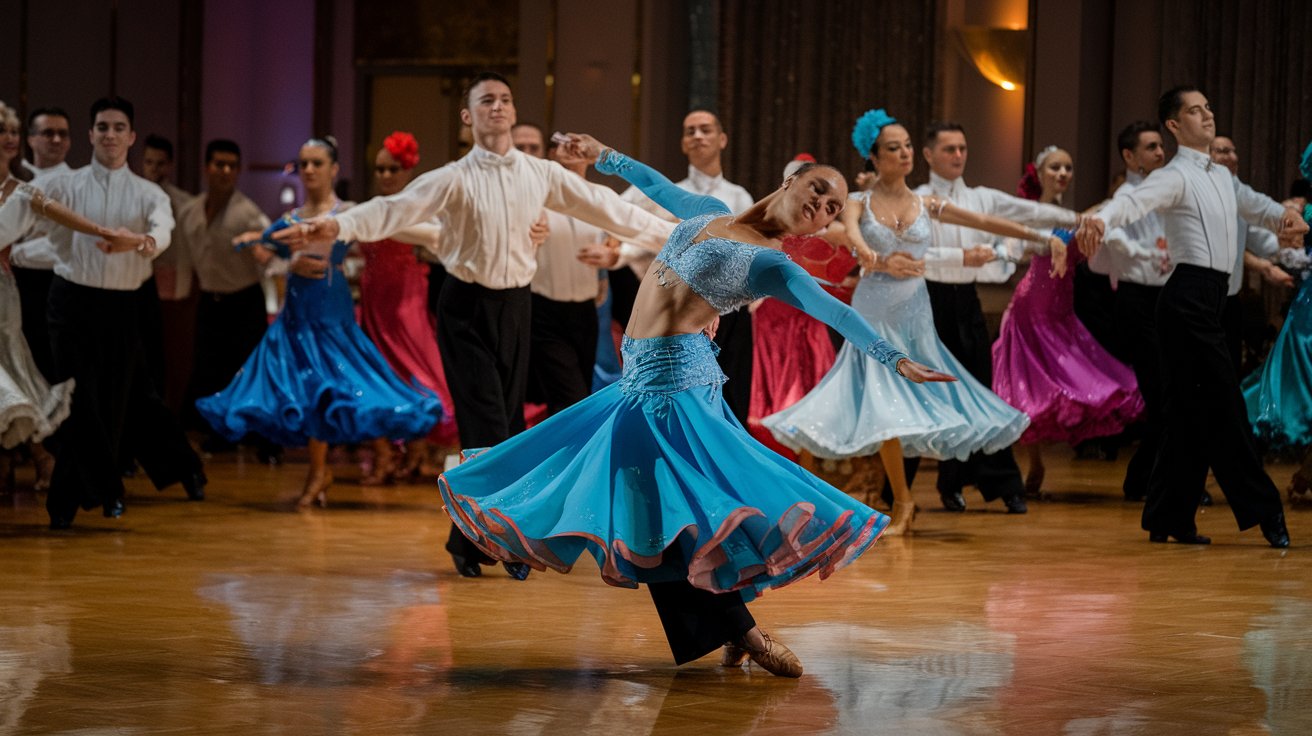
The International Latin dance category in competitive ballroom dancing features five standardized styles recognized worldwide by DanceSport organizations. These five Latin dances are Cha-Cha-Cha, Samba, Rumba, Paso Doble, and Jive. Each dance maintains specific technical requirements, timing patterns, and characteristic movements that distinguish it within competition settings. According to the National Dance Council of America, over 45,000 dancers participated in Latin ballroom competitions across the United States in 2025, with numbers projected to increase by 12% in 2026.
Mastering these ballroom Latin dances requires understanding both the technical framework and the cultural essence that each style embodies. Professional dancers typically spend 3-5 years developing proficiency across all five disciplines. The standardized Latin dance curriculum provides a structured pathway from bronze level through international championship standards, making these dances accessible for beginners while offering lifetime mastery challenges for advanced performers.
Cha-Cha-Cha: The Flirtatious Dance
The Cha-Cha-Cha originated in Cuba during the 1950s as a slower variation of Mambo, characterized by its distinctive triple step rhythm. This playful Latin dance features a 4/4 time signature with dancers executing movements on beats 2, 3, 4-and-1, creating the signature “cha-cha-cha” sound with their feet. American dance studios report that Cha-Cha remains the most popular entry-level Latin dance for beginners, with approximately 68% of new Latin dance students starting with this style in 2025.
Modern Cha-Cha choreography incorporates energetic hip action, syncopated footwork, and compact movements that emphasize the dance’s flirtatious character. Competitive Cha-Cha tempos range from 30-32 bars per minute, though social dancing often uses slightly slower speeds. The dance’s accessibility and upbeat Latin rhythm have made it a staple at weddings, social events, and dance clubs throughout the United States, with over 2.3 million Americans regularly dancing Cha-Cha at social venues in 2026.
Samba: Brazilian Carnival Energy
The ballroom Samba dance adapts the Brazilian Samba tradition into a progressive, traveling dance style performed in 2/4 or 4/4 time at approximately 50-52 bars per minute. Unlike its street carnival counterpart, ballroom Samba emphasizes continuous movement around the floor with characteristic bounce action created through flexing and straightening the knees. This energetic Latin dance incorporates elements like Samba rolls, bota fogos, and volta movements that showcase the dancer’s control and rhythmic precision.
The Samba’s distinctive bounce results from a specific technique where dancers compress and release through their legs while maintaining upper body stability. Professional instruction for Samba typically requires 8-12 months to develop proper bounce technique and body coordination. Dance studios across the United States report increased Samba class enrollment of 23% in 2025, attributed to growing interest in Brazilian culture and the dance’s cardiovascular benefits, with participants burning approximately 350-400 calories per hour during intensive Samba practice sessions.
Rumba: The Dance of Love
The Rumba stands as the slowest and most romantic of the five Latin ballroom dances, performed in 4/4 time at 25-27 bars per minute. Often called the “dance of love,” Rumba originated from Afro-Cuban folkloric dances and emphasizes controlled hip movement, delayed weight transfers, and intense emotional expression between partners. This sensual Latin dance style serves as the foundation for developing proper Latin technique, making it essential for dancers progressing through competitive levels.
Technical Rumba execution requires mastering Cuban motion, where hip movement results naturally from foot pressure and weight transfer rather than forced action. The dance’s slower tempo allows dancers to focus on precise body mechanics and musical interpretation. According to the United States Dance Championships data from 2025, Rumba consistently receives the highest artistic scores among Latin dances when executed at championship levels, with judges particularly valuing the emotional connection and storytelling that advanced dancers convey through this style.
Paso Doble: Spanish Passion and Drama
The Paso Doble represents a theatrical dance inspired by Spanish bullfighting traditions, where the leader portrays the matador and the follower represents the cape or, in some interpretations, the bull itself. This dramatic Latin dance is performed in 2/4 time at approximately 60-62 bars per minute, featuring strong, staccato movements and distinctive shaping that emphasizes power and controlled aggression. Unlike other Latin dances, Paso Doble maintains a more rigid frame similar to Standard ballroom styles.
The dance’s choreographic structure traditionally follows the narrative arc of a bullfight, with specific musical highlights marking dramatic moments in the performance. Paso Doble technique requires exceptional strength, particularly in maintaining frame and executing apel actions where dancers strike the floor forcefully. While less commonly danced socially in the United States compared to other Latin styles, Paso Doble remains a competitive favorite, with approximately 35% of amateur Latin competitors citing it as their preferred dance according to 2025 survey data from USA Dance.
Jive: High-Energy Swing Influence
The Jive brings swing dance energy into the Latin ballroom category, performed in 4/4 time at a rapid 42-44 bars per minute. This athletic Latin dance style evolved from American Swing and Jitterbug, incorporating elements of rock-and-roll dancing with characteristic kicks, flicks, and energetic rotation patterns. Jive demands exceptional stamina and cardiovascular fitness, with competitive dancers often performing this dance last in Latin competitions due to its physically demanding nature.
Technical Jive execution emphasizes compact footwork, strong knee lift actions, and continuous bounce action that differs from Samba’s characteristic movement. The dance features various classic figures including American spins, whips, and chicken walks that showcase both technical precision and playful personality. Fitness tracking data from dance studio participants in 2025 revealed that Jive practice burns approximately 450-550 calories per hour, making it the most calorically intensive Latin ballroom dance and contributing to its popularity among fitness-focused dancers across the United States in 2026.
Popular Social Latin Dances
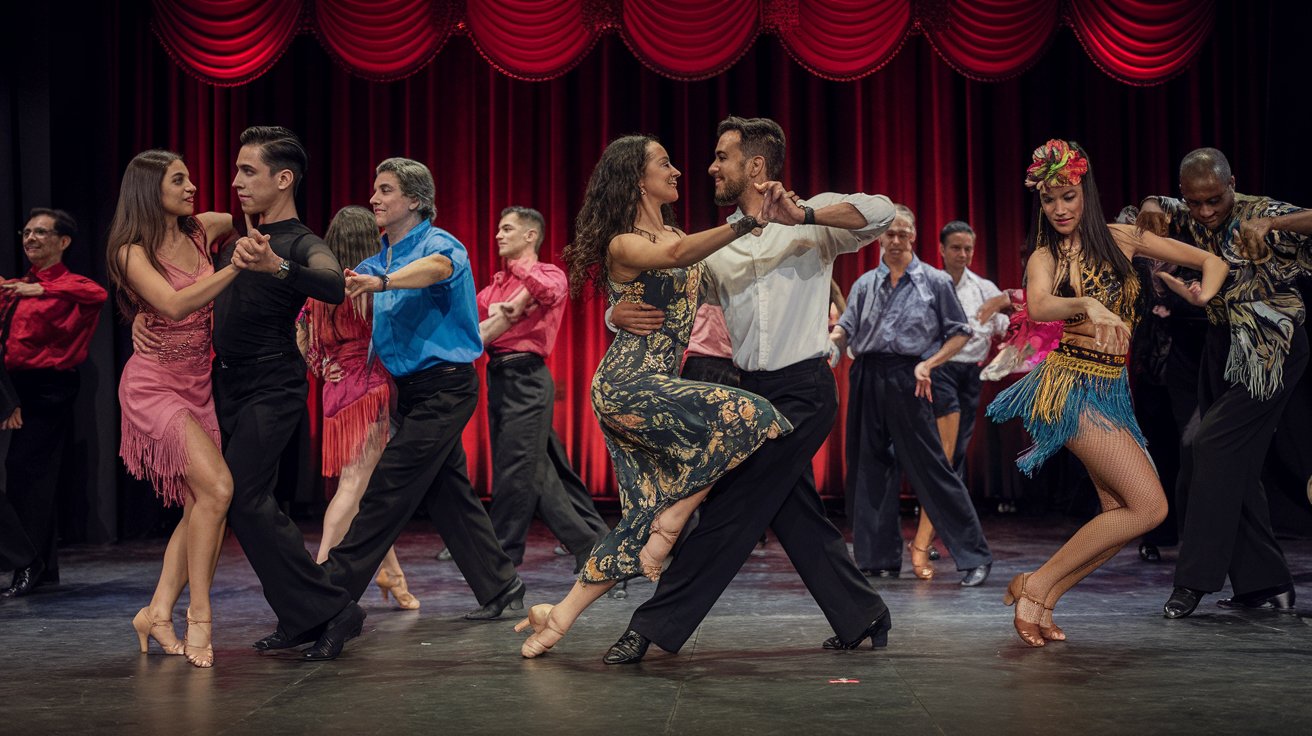
Beyond competitive ballroom, social Latin dances dominate nightclubs, festivals, and community dance events throughout the United States. These street-style Latin dances typically feature more improvisational freedom, simpler basic patterns, and emphasis on social connection rather than technical perfection. Social Latin dance communities have experienced remarkable growth, with over 8.5 million Americans participating in regular social Latin dancing at venues, festivals, and congresses in 2025, representing a 34% increase from 2020 figures.
The social Latin dance scene in major U.S. cities like New York, Los Angeles, Miami, and Houston features dedicated venues hosting nightly dance socials where enthusiasts practice Salsa, Bachata, Merengue, and other popular styles. These community-driven dance environments provide accessible entry points for beginners while offering experienced dancers opportunities for social connection and musical interpretation. The average social Latin dancer in the United States attends 2-3 dance events monthly and invests approximately $150-300 monthly in classes, social admissions, and dance-related expenses according to 2025 industry surveys.
Salsa: The Universal Latin Dance
The Salsa dance represents the most widely practiced social Latin dance globally, with distinct regional styles including Cuban Casino, New York On2, Los Angeles On1, and Colombian Cali style. This versatile Latin dance is performed to Salsa music in 4/4 time, typically at 150-220 beats per minute, featuring intricate turn patterns, partner work, and syncopated footwork. The United States hosts over 450 dedicated Salsa dance venues and approximately 15,000 weekly Salsa classes across major metropolitan areas in 2026.
Different Salsa styles emphasize varying technical elements: Cuban Casino focuses on circular patterns and Afro-Cuban body movement, New York style emphasizes elegance and breaking on the second beat, while LA style features linear patterns and showy performance quality. Professional Salsa instruction typically progresses through beginner, intermediate, and advanced levels over 18-24 months of consistent practice. The international Salsa congress circuit attracts thousands of American dancers annually, with major events in Los Angeles, New York, and Miami drawing 3,000-5,000 participants who attend workshops, performances, and social dancing over multi-day festivals.
Bachata: Dominican Sensuality
The Bachata dance originated in the Dominican Republic during the 1960s and has evolved into one of the fastest-growing social Latin dances in the United States, with class enrollment increasing 156% between 2020 and 2025. Traditional Bachata features a simple four-step pattern with a distinctive hip motion on the fourth beat, danced to romantic guitar-based music. Modern variations include Bachata Sensual, which incorporates waves, dips, and closer connection, and Bachata Fusion, blending elements from other dance styles.
The accessibility of basic Bachata makes it ideal for beginners, with most new dancers achieving social dance proficiency within 6-8 weeks of regular instruction. The dance’s romantic character and intimate connection have contributed to its popularity, particularly among dancers aged 25-45. Major U.S. cities now host dedicated Bachata festivals, with events like the Boston Bachata Festival and Denver Bachata Festival attracting 1,500-2,500 participants annually. Dance studio data from 2025 indicates that approximately 65% of students enrolling in Latin social dance classes specifically request Bachata instruction, making it the second most popular social Latin dance after Salsa.
Merengue: Dominican Simplicity
The Merengue offers the simplest entry point into Latin social dancing, featuring a basic marching step pattern that makes it accessible to absolute beginners. This Dominican Republic national dance is performed in 2/4 time with a steady, driving rhythm at approximately 120-130 beats per minute. The characteristic Merengue hip motion occurs naturally from alternating leg weight and bent knee action, requiring minimal technical instruction compared to other Latin dance styles.
Despite its simplicity, advanced Merengue dancing incorporates complex turn patterns, styling variations, and rhythmic footwork that provide progression opportunities for experienced dancers. The dance’s continuous popularity stems from its function as an accessible warm-up dance at social events and its effectiveness for teaching fundamental partner connection principles. Approximately 78% of Latin dance instructors in the United States use Merengue as an introductory dance for complete beginners according to 2025 professional surveys, with students typically learning basic social Merengue proficiency within their first 2-3 classes.
Argentine Tango: Improvisational Elegance
While Argentine Tango differs significantly from ballroom Tango, it represents an important social Latin dance tradition with strong communities throughout the United States. This improvisational partner dance emphasizes connection, musicality, and navigation rather than memorized choreography. Argentine Tango features walking movements, ochos, giros, and boleos executed in close embrace to traditional tango orchestrations or contemporary tango nuevo music.
The Argentine Tango learning curve extends longer than most social Latin dances, with dancers typically requiring 1-2 years of consistent practice to develop comfortable social dancing ability. However, the dance’s rich musical tradition and emphasis on improvisation create deep engagement for serious students. Major U.S. cities including San Francisco, Portland, and Washington D.C. maintain active tango communities with multiple weekly milongas (tango social dances). The 2025 U.S. Tango Championship attracted over 400 competitive couples, while social tango participation includes an estimated 85,000 regular dancers nationwide, representing a dedicated subset of the broader Latin dance community.
Traditional and Folkloric Latin Dances
The folkloric Latin dance traditions preserve cultural heritage from various Latin American countries, featuring dances that originated in specific regions and maintain connections to historical, religious, or celebratory contexts. These traditional dance forms often incorporate distinctive costumes, live music ensembles, and community participation rather than partner-based social dancing. Approximately 1,200 folkloric dance groups operate throughout the United States in 2026, maintaining cultural traditions within Latino communities and educating broader audiences about Latin American heritage through performances and workshops.
Many folkloric Latin dances remain closely tied to specific celebrations, rituals, or seasonal events within their cultures of origin. These dances frequently feature group formations, call-and-response patterns, and regional musical instruments that distinguish them from international social dance styles. Cultural education programs in schools, community centers, and cultural institutions increasingly incorporate folkloric Latin dance instruction, with participation growing by 18% annually according to the National Association of Latino Arts and Cultures. The preservation and promotion of traditional dance heritage serves both cultural maintenance within immigrant communities and cross-cultural education throughout diverse American communities.
Baile Folklórico: Mexican Dance Heritage
The Baile Folklórico represents a collection of traditional Mexican folk dances from various regions, each with distinctive music, costumes, and choreography reflecting local history and culture. Popular Baile Folklórico styles include Jarabe Tapatío from Jalisco, Danza de los Viejitos from Michoacán, and various son and zapateado dances. These performances feature colorful traditional dress, with women’s dresses often incorporating elaborate skirt work and men’s costumes reflecting charro or regional peasant attire.
Over 850 organized Baile Folklórico groups exist throughout the United States, with particularly strong presence in California, Texas, Arizona, and Illinois. Many groups perform at cultural festivals, schools, and community events while offering classes that teach Mexican dance traditions to new generations. The annual Encuentro de Danza Folklórica events held across the U.S. bring together groups for workshops, performances, and competitions, with major gatherings attracting 50-200 participating dance groups. Educational programs teaching Baile Folklórico reached approximately 125,000 students in American schools during 2025, contributing to cultural awareness and heritage preservation throughout increasingly diverse communities.
Cumbia: Colombian and Central American Traditions
The traditional Cumbia dance originated along Colombia’s Caribbean coast, blending Indigenous, African, and Spanish influences into a distinctive folkloric form. Traditional Cumbia features women holding candles while executing shuffling steps and men pursuing with more animated movements, all performed to characteristic Cumbia rhythms played on drums, flutes, and accordions. Modern social Cumbia variations have evolved throughout Latin America, with distinct Colombian, Mexican, and Argentine styles developing unique characteristics.
Social Cumbia dancing popularity has increased significantly in U.S. Latin dance communities, with many venues incorporating Cumbia sets into their musical programming. The dance’s accessible basic patterns make it approachable for beginners, while regional styling variations provide depth for advanced dancers. Approximately 320 dance studios across the United States offered dedicated Cumbia classes in 2025, a 67% increase from 2022. The Cumbia music genre has experienced mainstream crossover success, with cumbia-influenced tracks appearing in popular music and contributing to broader interest in learning the traditional dance forms associated with this rhythmic style.
Latin Dance Styles for Beginners
Individuals new to Latin dancing benefit from understanding which styles offer the most accessible entry points and provide foundations applicable to other dances. The ideal beginner Latin dances feature relatively simple basic steps, forgiving timing, and widespread availability of instruction. Dance educators recommend that beginners start with one or two styles, developing basic proficiency before expanding their repertoire. Most successful Latin dance students invest 3-6 months focusing on fundamental techniques before diversifying across multiple styles.
The typical progression for Latin dance beginners involves mastering basic patterns, developing musicality and timing, learning fundamental partner connection principles, and gradually expanding vocabulary with intermediate figures. Quality instruction proves essential, with private lessons accelerating progress 2-3 times faster than group classes alone according to 2025 data from the Dance Teachers Association. However, group classes provide essential social experience, practice with multiple partners, and community connection that supports long-term engagement. The combination of weekly group classes supplemented by occasional private instruction represents the optimal learning approach for most beginners, with approximately 72% of successful Latin dancers utilizing this mixed instruction model.
Best First Latin Dances to Learn
The Merengue consistently ranks as the easiest Latin dance for absolute beginners, requiring only basic marching steps and simple turns to participate socially. Most students achieve basic Merengue proficiency within 1-2 classes, making it an ideal confidence builder. Following Merengue, Bachata offers the next most accessible learning curve, with its straightforward four-step pattern and intuitive hip motion allowing beginners to dance socially within 4-6 weeks of regular instruction.
For students interested in competitive ballroom, Cha-Cha-Cha provides the recommended starting point among the five Latin dances. Its moderate tempo and clear rhythm structure make it more accessible than faster or technically demanding styles. Salsa, while slightly more complex rhythmically, benefits from widespread availability of instruction and abundant social dancing opportunities that support rapid skill development through practice. Dance instructors surveyed in 2025 recommended the following optimal learning sequence: begin with Merengue or Bachata for immediate social dancing success, add Salsa for expanded opportunities, then progress to Cha-Cha and other ballroom styles for students interested in competitive or more technical dancing.
Essential Skills for Latin Dancing Success
Successful Latin dancers develop several fundamental skills that transfer across all styles: rhythmic timing and musicality, basic body coordination and balance, frame and connection principles for partner work, and spatial awareness for navigation. Rhythmic competency represents the most critical foundation, with students who develop strong musical timing progressing significantly faster than those focusing exclusively on step patterns. Approximately 45% of beginners struggle initially with Latin music timing, particularly distinguishing between different rhythmic structures and dancing on the correct beats.
Body isolation and coordinated movement quality distinguish advanced Latin dancers from beginners, with hip motion, arm styling, and upper body expression requiring focused practice to develop naturally. Most dancers require 8-12 months of consistent practice before body movements begin feeling natural rather than consciously executed. Partner connection skills including leading and following, frame maintenance, and spatial awareness develop through practice with multiple partners rather than dancing exclusively with one person. Dance educators emphasize that social dancing practice accelerates skill development more effectively than classes alone, with successful students typically attending 1-2 social dance events weekly in addition to taking regular lessons.
Latin Dance Music Characteristics
Understanding Latin dance music structures enhances dancing ability and musical interpretation across all styles. Each Latin dance genre features distinctive instrumentation, rhythmic patterns, and musical phrasing that inform appropriate movement and styling. Traditional Latin music incorporates percussion instruments like congas, bongos, timbales, and claves that create complex polyrhythmic textures, while melodic instruments including piano, brass, and strings provide harmonic and melodic content. Modern Latin dance music often blends traditional elements with contemporary production, creating fusion styles that maintain rhythmic authenticity while incorporating modern sensibilities.
Dancers who develop musical literacy in Latin genres gain significant advantages in expressiveness, timing precision, and creative interpretation. This includes recognizing song structures with verses, choruses, and bridges, identifying instrumental breaks and musical accents for styling opportunities, and distinguishing between different instruments within the arrangement. Professional Latin dancers emphasize that musicality separates competent technical dancers from truly captivating performers. Educational resources including music analysis workshops, rhythm training classes, and listening guides have become increasingly available, with approximately 230 specialized musicality for dancers courses offered across the United States in 2025, reflecting growing recognition of music knowledge as essential to dance development.
Salsa Music: Complex Rhythmic Layers
The Salsa music genre developed in New York during the 1960s-70s, synthesizing Cuban son, mambo, and other Caribbean styles with jazz influences. Characteristic Salsa instrumentation includes a rhythm section with piano playing montuno patterns, bass providing the fundamental pulse, and multiple percussion instruments creating interlocking rhythmic patterns. The clave rhythm serves as the foundational timeline in Salsa music, with either 2-3 or 3-2 clave patterns organizing the entire rhythmic structure.
Modern Salsa music encompasses various substyles including classic Salsa dura, romantic Salsa, timba from Cuba, and contemporary Salsa incorporating electronic elements. Dancers develop ability to identify different Salsa styles and adjust their dancing accordingly, with classic Salsa suggesting more traditional partnering while timba encourages Afro-Cuban body movement and musicality. The tempo range for Salsa music spans from approximately 140 beats per minute for slower romantic styles to 220 BPM for uptempo Cuban timba, requiring dancers to adapt their movement vocabulary and energy to match musical intensity. Professional Salsa dancers typically develop preferences for specific musical eras or styles, with some specializing in golden age classic Salsa from the 1970s while others focus on contemporary productions.
Bachata Music: Guitar-Driven Romance
Traditional Bachata music features acoustic guitar as the lead instrument, accompanied by bass, bongos, güira, and romantic vocals typically expressing themes of love and heartbreak. The music maintains a steady 4/4 rhythm with distinctive Bachata guitar patterns that create the genre’s characteristic sound. Modern Bachata has evolved significantly, with artists incorporating electric guitars, synthesizers, and urban music influences while maintaining the core rhythmic structure that defines the dance.
The evolution of Bachata music styles includes traditional Bachata from the 1960s-80s, tecno-bachata or modern Bachata emerging in the 1990s, and contemporary Urban Bachata blending reggaeton and pop influences. Each musical evolution has influenced corresponding dance style developments, with traditional music accompanying classic Dominican Bachata, while sensual Bachata choreography often pairs with modern romantic productions. Major Bachata artists including Romeo Santos, Prince Royce, and Aventura have achieved mainstream success in the United States, with Bachata music appearing on Billboard Latin charts and generating millions of streams, contributing directly to increased interest in learning the dance throughout American communities.
Health Benefits of Latin Dancing
Participating in Latin dance activities provides extensive physical, mental, and social health benefits supported by peer-reviewed research. The cardiovascular benefits of Latin dancing match or exceed traditional fitness activities, with moderate-intensity social dancing burning 250-400 calories per hour and intensive training sessions consuming 400-600 calories hourly. Studies published in the American Journal of Preventive Medicine found that regular Latin dance participation reduced cardiovascular disease risk by 46% compared to sedentary individuals, while improving overall fitness markers including VO2 max, blood pressure, and cholesterol profiles.
Beyond cardiovascular fitness, Latin dancing develops muscular strength particularly in lower body and core regions, enhances flexibility and range of motion, improves balance and coordination reducing fall risk, and increases bone density through weight-bearing movement. The cognitive benefits prove equally significant, with research from the New England Journal of Medicine indicating that frequent dancing reduced dementia risk by 76%, the highest protective effect among studied activities. Learning complex Latin dance patterns stimulates neuroplasticity, enhances memory function, and maintains cognitive flexibility. Mental health benefits include reduced anxiety and depression, increased self-confidence, and elevated mood through endorphin release and social engagement, making Latin dance participation a comprehensive approach to holistic wellness for individuals across all age groups.
Latin Dance Community and Culture in the United States
The Latin dance community throughout the United States represents a vibrant, inclusive culture that transcends ethnic and cultural boundaries. While rooted in Latin American traditions, contemporary Latin dance communities welcome participants from all backgrounds, with approximately 54% of social Latin dancers in the U.S. identifying as non-Latino according to 2025 demographic surveys. This diversity reflects the universal appeal of Latin dance and its function as a cross-cultural bridge fostering understanding and appreciation across different communities.
Major Latin dance events and festivals occur throughout the year across the United States, drawing thousands of participants for multi-day celebrations of dance, music, and culture. Events like the Los Angeles Salsa Congress, New York Salsa Congress, and Miami Bachata Festival attract 3,000-6,000 participants annually, offering workshops with international instructors, professional performances, and extensive social dancing opportunities. The economic impact of Latin dance in the United States exceeded $2.8 billion in 2025, including instruction fees, venue operations, event tourism, dancewear and shoes, and related businesses. This robust industry supports thousands of professional instructors, performers, DJs, and event organizers while contributing to cultural enrichment and community vitality in cities throughout the nation.
Related video about types of latin dance
This video complements the article information with a practical visual demonstration.
FAQ – Common Questions
What are the 5 Latin dances in ballroom competition?
The five Latin dances in International Latin ballroom competition are Cha-Cha-Cha, Samba, Rumba, Paso Doble, and Jive. These standardized dances each feature specific technical requirements, characteristic movements, and musical timing patterns recognized by DanceSport organizations worldwide. Competitive dancers must master all five styles to participate in Latin championship events, with each dance testing different technical skills from the romantic, slow Rumba to the high-energy, athletic Jive. Most competitive ballroom dancers spend 3-5 years developing proficiency across all five Latin disciplines to reach advanced competitive levels.
What is the easiest Latin dance for beginners to learn?
Merengue is widely considered the easiest Latin dance for beginners, featuring a simple marching step pattern that most people can execute within their first class. The straightforward timing and basic movements allow new dancers to participate socially almost immediately. Bachata offers the next most accessible entry point, with its four-step pattern and natural hip motion allowing beginners to achieve social dancing competency within 4-6 weeks of regular instruction. Both dances provide confidence-building starting points before progressing to more complex styles like Salsa or ballroom Latin dances that require additional technical development and timing precision.
What is the difference between ballroom Latin and social Latin dances?
Ballroom Latin dances follow standardized technical requirements for competitive DanceSport, featuring specific figures, timing, and technique judged in competitions. The five ballroom Latin styles include Cha-Cha, Samba, Rumba, Paso Doble, and Jive. Social Latin dances like Salsa, Bachata, and Merengue emphasize improvisation, social connection, and personal expression rather than standardized choreography. Social styles typically offer more flexibility in interpretation and styling, making them more accessible for casual dancers. While ballroom Latin requires formal instruction and practice to execute properly, social Latin dances can be enjoyed with basic patterns learned in a few weeks of classes.
How long does it take to learn Latin dancing?
Learning timelines for Latin dancing vary significantly based on the specific style, lesson frequency, and individual goals. Basic social proficiency in simple styles like Merengue or Bachata typically requires 4-8 weeks of weekly classes, allowing participation in social dancing. Developing comfortable social dancing ability in more complex styles like Salsa generally takes 3-6 months of consistent practice. For competitive ballroom Latin dancing, reaching bronze level proficiency across all five dances typically requires 1-2 years of regular instruction, while advanced competitive levels demand 3-5 years or more of dedicated training. Most successful Latin dancers continue learning throughout their dance careers, as mastery involves ongoing refinement of technique, musicality, and artistic expression.
What should I wear to Latin dance classes?
For Latin dance classes, wear comfortable, fitted clothing that allows free movement and helps instructors observe your body mechanics. Women typically wear fitted tops or dance leotards with leggings, dance pants, or practice skirts, while men usually wear fitted shirts or t-shirts with dance pants or comfortable slacks. Avoid baggy clothing that obscures movement. Footwear is crucial: beginners can start with smooth-soled shoes or sneakers, but serious students should invest in proper Latin dance shoes featuring suede soles that allow pivoting while providing floor grip. Women’s Latin shoes feature 2-3 inch heels, while men’s shoes have 1-1.5 inch heels. Avoid rubber-soled athletic shoes that stick to the floor and prevent proper turning technique.
Can I learn Latin dancing if I have no rhythm?
Yes, rhythmic ability can be developed through practice, and perceived lack of rhythm should not prevent anyone from learning Latin dancing. Approximately 45% of beginning dancers initially struggle with timing, but rhythm is a learnable skill rather than an innate talent. Successful strategies include practicing with music regularly outside of class, using rhythm training apps or videos, counting beats aloud while dancing, and starting with slower music before progressing to faster tempos. Many instructors offer specialized musicality workshops that teach students to hear and interpret Latin music structures. Most students who persist through initial rhythmic challenges develop solid timing within 2-4 months of consistent practice, allowing them to enjoy social Latin dancing confidently.
| Dance Type | Key Characteristics | Best For |
|---|---|---|
| Ballroom Latin | 5 standardized competitive styles (Cha-Cha, Samba, Rumba, Paso Doble, Jive) with technical requirements | Competitive dancers, structured learning, technical precision |
| Salsa | Multiple regional styles, complex turn patterns, 150-220 BPM, extensive social scene | Social dancing, musicality development, community connection |
| Bachata | Simple 4-step pattern, romantic character, hip motion on beat 4, multiple modern variations | Beginners, romantic expression, quick learning curve |
| Merengue | Easiest pattern (marching step), 2/4 time, steady rhythm, Dominican origin | Absolute beginners, confidence building, immediate social dancing |
| Argentine Tango | Improvisational, close embrace, complex musicality, walking-based movements | Advanced dancers, musical interpretation, intimate connection |
| Folkloric Dances | Cultural preservation, traditional costumes, regional variations, group formations | Cultural education, performance, heritage preservation |