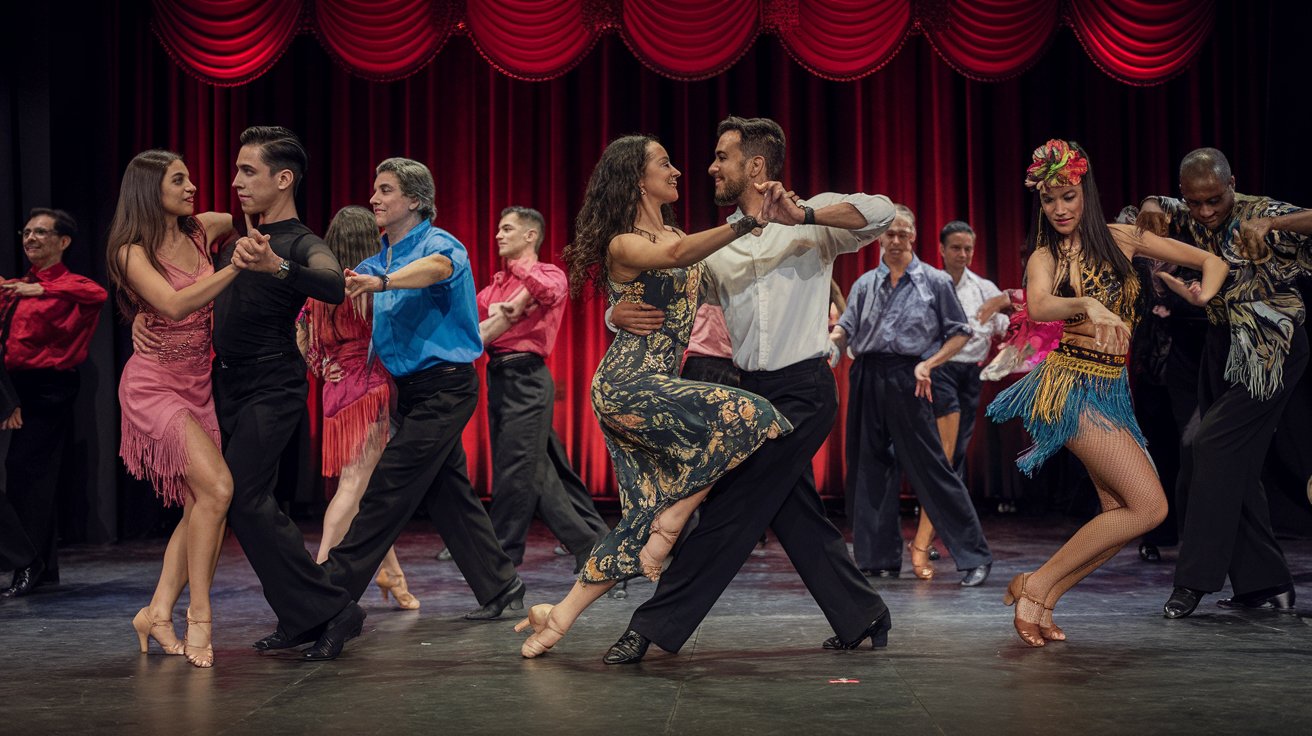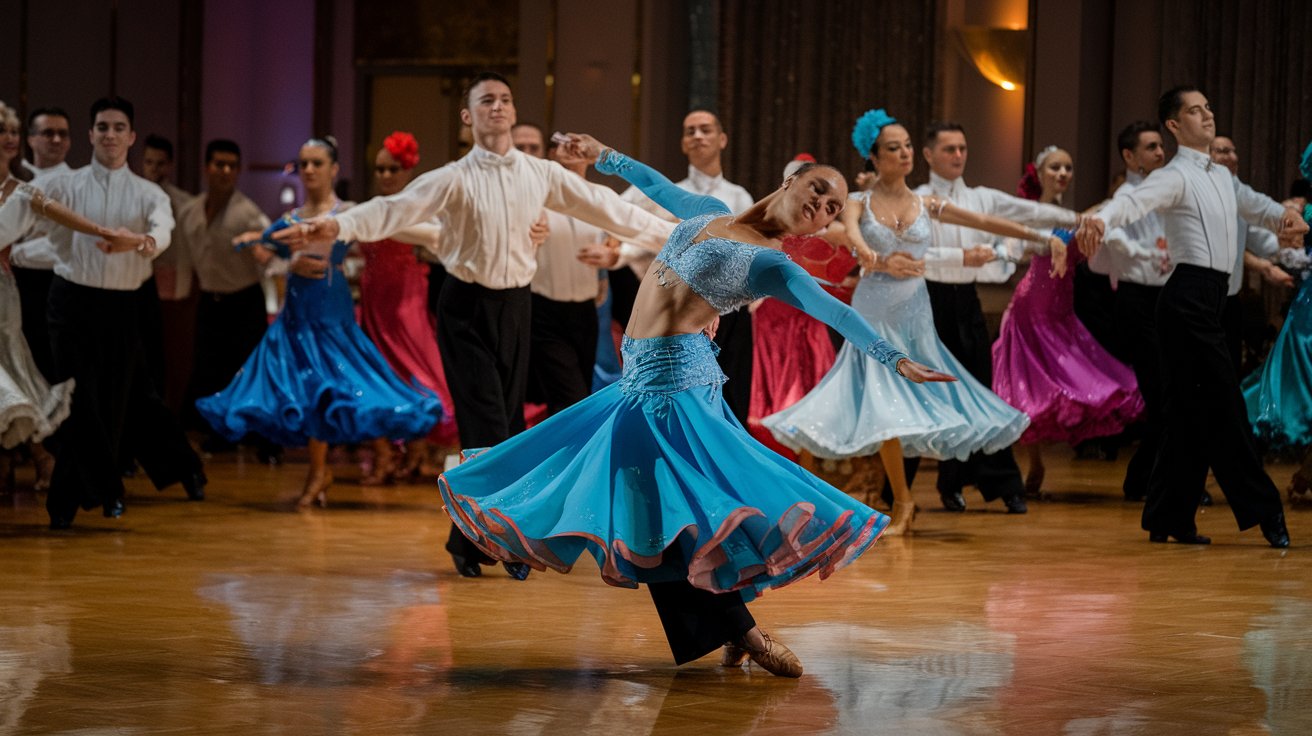
Latin dance is a vibrant collection of partner and solo dance styles originating from Latin America, the Caribbean, and Spain, characterized by rhythmic hip movements, passionate expression, and syncopated musical patterns. These dances include salsa, bachata, cha-cha, rumba, samba, and paso doble, each with distinct rhythms and cultural origins. As of 2026, over 14 million Americans actively participate in Latin dance classes, making it one of the fastest-growing dance genres in the United States for both social enjoyment and competitive ballroom dancing.
Understanding Latin Dance and Its Origins
Latin dance encompasses multiple dance styles that emerged from the cultural fusion of Indigenous, African, and European influences across Latin America and the Caribbean between the 16th and 20th centuries. The term gained prominence in the 1960s when ballroom dance organizations categorized specific dances as Latin dances for competitive purposes. These dances share common characteristics including hip action derived from the Cuban motion, close partner connection, and music with strong percussion elements that create the signature Latin rhythm.
The origin of Latin dance varies by style, with salsa developing in 1970s New York City from Cuban son and Puerto Rican influences, while samba originated in early 20th century Brazil from African diaspora traditions. Bachata emerged from the Dominican Republic in the 1960s, and cha-cha was created in Cuba during the 1950s as a variation of mambo. Each dance style carries unique historical significance and reflects the social conditions, migration patterns, and cultural exchanges of its birthplace, making Latin dance a living repository of multicultural heritage.
Latin Dance vs Ballroom Dance: Key Differences
Many people wonder about the distinction between Latin dance and ballroom dance, and the relationship is both interconnected and distinct. Ballroom dance is an umbrella term that encompasses two main categories: Standard (or Smooth) dances and Latin dances. The Standard division includes waltz, tango, foxtrot, quickstep, and Viennese waltz, characterized by closed dance positions and flowing movements across the floor. In contrast, Latin ballroom dance includes cha-cha, samba, rumba, paso doble, and jive, featuring more hip action, open positions, and stationary or compact floor patterns.
The technical differences are substantial: ballroom Standard dances require dancers to maintain body contact through the torso and move in smooth, gliding patterns around the dance floor with rise and fall techniques. Latin dances emphasize rhythmic hip movements generated through bent-knee action, quick directional changes, and more interpretive styling with frequent position changes between partners. As of 2026, competitive ballroom dancers in the United States must master both divisions to compete at championship levels, though many social dancers specialize in one category. The musicality differs significantly too, with Standard dances using classical and jazz standards while Latin dance music incorporates Afro-Caribbean rhythms, contemporary Latin pop, and traditional folk melodies.
The Five Classic Latin Dances in Ballroom Competition
When people ask about the five Latin dances, they typically refer to the official competitive Latin dances recognized by the World Dance Council and USA Dance, the governing body for ballroom competition in America. These five standardized styles form the foundation of Latin ballroom dance competitions worldwide and represent the core curriculum taught in dance studios across the United States in 2026.
Cha-Cha: The Playful Rhythm Dance
The cha-cha is danced to music with 30 bars per minute (120 beats per minute) and features a distinctive syncopated rhythm pattern counted as “two-three-cha-cha-cha.” This Latin dance originated in Cuba during the 1950s and emphasizes flirtatious interaction between partners, compact footwork, and sharp hip action. The characteristic triple step gives cha-cha its name and playful energy, making it one of the most popular Latin dances for beginners due to its moderate tempo and clear rhythmic structure. In 2026, cha-cha remains the most taught competitive Latin dance in United States dance studios, with approximately 68% of beginner Latin students starting with this style.
Samba: The Brazilian Carnival Dance
Samba represents Brazil’s national dance and is performed to music ranging from 48 to 52 bars per minute in competition settings. Unlike other Latin dances, samba features continuous traveling action around the floor with characteristic bounce action created through flexing and straightening the knees. The dance style incorporates rolling hip movements, rhythmic pelvic tilts called “samba bounce,” and distinctive steps like the volta and bota fogo. Brazilian samba schools in the United States have grown by 34% since 2022, with major communities in Miami, Los Angeles, and New York City hosting authentic samba events throughout the year, particularly during Carnival season in February and March 2026.
Rumba: The Dance of Love
The rumba is the slowest of the five Latin dances, performed to music with 25 to 27 bars per minute, and is often called the “dance of love” due to its romantic, sensual character. This Latin dance originated in Cuba and emphasizes slow, controlled hip movements, dramatic poses, and emotional storytelling between partners. The rumba uses a distinctive delayed weight transfer called “Cuban motion” that creates the signature hip action, with movements initiated through the standing leg rather than the stepping leg. Advanced dancers describe rumba as the most technically challenging Latin dance because slow tempo exposes every technical flaw, requiring approximately 2-3 years of consistent practice to achieve intermediate proficiency according to 2026 dance instructor surveys.
Paso Doble: The Spanish Bullfight Dance
Paso doble differs dramatically from other Latin dances as it represents a Spanish bullfight, with the male dancer portraying the matador and the female dancer representing the cape or, in some interpretations, the bull itself. Danced to march-like music at 60 to 62 bars per minute, this dance style features strong, staccato movements, dramatic shaping, and aggressive floor patterns that travel extensively around the competition floor. The paso doble requires dominant character portrayal and is the only Latin dance where the female partner primarily follows without independent styling. Despite its European Spanish origin rather than Latin American roots, paso doble remains classified as a Latin dance in competitive ballroom dance due to historical competition categorization established in the mid-20th century.
Jive: The Energetic Swing Dance
The jive is the fastest and most physically demanding of the five Latin dances, performed to music ranging from 42 to 44 bars per minute with a lively, bouncy character derived from African American swing dance traditions. Originally developed in the United States during the 1930s and 1940s, jive evolved from Lindy Hop, jitterbug, and boogie-woogie, later adopted into the Latin division of competitive ballroom. The dance style features energetic kicks, flicks, quick footwork patterns, and athletic lifts and tricks at advanced levels. In 2026, jive remains popular at social dance events across the United States, with West Coast Swing communities often incorporating jive techniques, though competitive jive has become increasingly specialized with approximately 12% fewer competitors compared to the other four Latin dances.
Popular Latin Dance Styles Beyond Competition
Beyond the five competitive Latin dances, numerous social Latin dance styles have gained immense popularity across the United States, with participation in social Latin dancing increasing by 41% between 2021 and 2026 according to dance studio membership data. These dance styles are typically taught in separate classes from ballroom Latin and emphasize social interaction, musical interpretation, and cultural authenticity rather than competitive technique.
Salsa: The King of Social Latin Dancing
Salsa dominates the social Latin dance scene in America, with an estimated 8.5 million regular participants as of 2026. This Latin dance developed in New York City during the 1970s, blending Cuban son, mambo, Puerto Rican bomba and plena, and jazz influences into a versatile partner dance performed to salsa music with distinctive percussion patterns. Multiple salsa styles exist, including New York Style (dancing on the second beat, linear patterns), Los Angeles Style (dancing on the first beat, circular patterns), Cuban Style (circular partner exchanges called “casino”), and Colombian Style (faster footwork, closed position). Major cities like Miami, New York, Los Angeles, and Chicago host weekly salsa socials with 200-500 attendees, and international salsa congresses attract thousands of dancers annually throughout the United States.
Bachata: The Romantic Dominican Dance
Bachata has experienced explosive growth in the United States since 2015, becoming the second most popular social Latin dance with approximately 6.2 million participants in 2026. Originating in the Dominican Republic during the 1960s, bachata features a basic four-step pattern with a distinctive hip lift on the fourth beat, close partner connection, and romantic, sensual styling. Modern bachata has evolved into several distinct styles: Traditional (Dominican) bachata maintains cultural authenticity with simple footwork and minimal turns, while Bachata Moderna incorporates cross-body leads and multiple turn patterns. Sensual bachata, developed in Spain during the 2000s, emphasizes body waves, dips, and intimate connection, gaining particular popularity among younger dancers aged 22-35. The music typically features guitar melodies and emotional lyrics about love and heartbreak, with contemporary artists like Romeo Santos and Prince Royce topping Latin music charts and inspiring new dancers to learn this Latin dance style.
Merengue: The Easy-to-Learn Dominican Dance
Merengue is often recommended as the ideal Latin dance for beginners due to its simple two-step pattern and straightforward 2/4 timing that matches the strong beat in merengue music. This Dominican dance features a characteristic limping step pattern historically attributed to various origin stories, though the actual technique involves a subtle hip motion created through alternating bent and straight legs. The dance style requires minimal space, making it perfect for crowded social venues, and can be learned in a single introductory class. Despite its simplicity, advanced merengue dancers incorporate complex turn patterns, body isolations, and rhythmic variations that demonstrate musicality and partnership skills. As of 2026, merengue music popularity has declined compared to bachata and reggaeton influences, yet it remains a staple at Latin dance socials with approximately 3.8 million American participants, particularly within Dominican and general Hispanic communities.
Is Tango a Latin Dance? Addressing Common Confusion
The question “Is tango a Latin dance?” generates considerable confusion among dancers and the general public because the answer depends on context. Argentine tango originated in Buenos Aires, Argentina during the late 19th century, developing in the working-class neighborhoods from a blend of African candombe, European polka and waltz, and indigenous South American influences. Geographically and culturally, tango is undeniably a Latin American dance form, created in South America by Latin American people expressing their cultural identity through movement.
However, in the competitive ballroom dance world, tango is categorized in the Standard (Smooth) division rather than the Latin division. The ballroom tango performed in competitions differs substantially from authentic Argentine tango, having been standardized by European dance teachers in the early 20th century with different posture, sharper movements, and staccato character. Ballroom tango uses closed position throughout, features head snaps and dramatic poses, and is danced to march-like music at 33 bars per minute. In contrast, Argentine tango emphasizes improvisation, close embrace with varying positions, and sultry, walking-based movements danced to traditional tango orchestras or contemporary tango nuevo music. As of 2026, approximately 2.4 million Americans practice some form of tango, with Argentine tango communities particularly strong in metropolitan areas like New York, San Francisco, Portland, and Austin, operating independently from the ballroom dance competition circuit.
Essential Elements of Latin Dance Technique
Mastering Latin dance requires understanding and developing specific technical elements that distinguish these styles from other dance forms. Whether learning competitive ballroom Latin or social Latin dances like salsa and bachata, these fundamental principles create the characteristic look and feel of Latin dance movement.
Rhythm and Timing Mastery
Rhythm and timing form the foundation of all Latin dance, with each style featuring distinctive rhythmic patterns that dancers must internalize. Unlike ballroom Standard dances that emphasize continuous flow, Latin dances highlight syncopation, accented beats, and the interplay between movement and silence. Cha-cha dancers must execute the syncopated “4-and-1” timing, while samba dancers navigate complex “1-a-2” bounce rhythms. Salsa timing varies between “on 1” and “on 2” depending on style preference, fundamentally changing which beats receive weight changes and directional momentum. Developing rhythmic competency requires listening to Latin dance music actively, identifying percussion patterns (particularly clave rhythms in salsa and son), and practicing basic steps with metronome precision before attempting complex patterns. As of 2026, dance instructors increasingly utilize rhythm training apps and slow-tempo practice tracks to help students develop timing accuracy, with research showing that dedicated rhythm practice accelerates overall dance progression by approximately 35% compared to pattern-only instruction.
Cuban Motion and Hip Action
The signature hip movement in Latin dance, technically called Cuban motion, results from proper weight transfer mechanics rather than isolated hip swinging. When a dancer steps onto a bent knee and then straightens that leg while the opposite leg bends, the pelvis naturally settles into the hip of the standing leg, creating the characteristic hip action. This Latin dance fundamental requires understanding that hip movement is a consequence of leg action, not a separate motion added to steps. The quality and amplitude of hip action varies across dance styles, with rumba featuring slow, controlled Cuban motion emphasizing each weight change, while cha-cha demonstrates sharper, more compact hip movements matching the quicker tempo. Common mistakes include forcing hip movement through the upper body, creating artificial swaying that appears disconnected from the music and lacks the grounded quality of authentic Latin dance technique. Professional instruction typically requires 6-12 months of consistent practice for intermediate dancers to develop natural, musically appropriate hip action according to 2026 dance pedagogy standards.
Partner Connection in Latin Dancing
Partner connection in Latin dance differs significantly from Standard ballroom dancing, utilizing various frame positions and connection points throughout a dance. Rather than maintaining constant body contact through the torso, Latin dances alternate between close position, open position, hand-to-hand connection, and solo sections where partners dance independently while maintaining visual and rhythmic connection. The male leader provides directional intention through hand pressure, body positioning, and timing, while the female follower maintains her own balance and axis, interpreting leads with appropriate styling and musical expression.
Effective Latin dance partnership requires both technical skill and interpersonal awareness. Leaders must provide clear, timely leads without forcing or yanking their partners, developing hand and arm strength to maintain frame while remaining flexible enough to allow follower expression. Followers must maintain consistent resistance in the connection, providing enough tension for leaders to communicate effectively while staying light and responsive to directional changes. Social Latin dancing in 2026 increasingly emphasizes consent and communication, with dance communities adopting verbal check-ins, respecting personal space boundaries, and creating inclusive environments where dancers of all identities can lead or follow regardless of gender. Major dance organizations including USA Dance and the National Dance Council of America have implemented partner respect guidelines and anti-harassment policies at all sanctioned events, reflecting broader cultural shifts toward equity and safety in partner dancing.
Latin Dance Music Characteristics and Evolution
Latin dance music encompasses diverse musical genres unified by rhythmic complexity, percussion-driven arrangements, and cultural roots in Latin American and Caribbean traditions. The distinctive sound of Latin music features layered polyrhythms created by multiple percussion instruments including congas, timbales, bongos, claves, and cowbells, establishing the rhythmic foundation that dictates dance movement. Melodic elements typically include brass sections (trumpets, trombones), piano montunos (repetitive rhythmic patterns), and string sections, with vocals ranging from romantic ballads to call-and-response patterns derived from African musical traditions.
As of 2026, Latin dance music has evolved substantially, incorporating electronic production elements, reggaeton influences, and fusion with pop, hip-hop, and EDM genres. Contemporary salsa artists blend traditional instrumentation with modern production techniques, while bachata music has expanded from acoustic guitar-based arrangements to include electric instruments and urban influences. The rise of streaming platforms has democratized Latin music access, with Spotify reporting that Latin music streams in the United States increased by 127% between 2020 and 2026, introducing millions of non-Hispanic Americans to genres that inspire them to learn corresponding Latin dances. Popular artists like Bad Bunny, Karol G, and Rosalía have achieved mainstream crossover success while maintaining connections to traditional Latin rhythms, creating new fusion styles that dance instructors and choreographers are actively incorporating into contemporary Latin dance instruction and social dancing environments.
Getting Started with Latin Dance: A Beginner’s Guide
Starting your Latin dance journey in 2026 offers numerous pathways depending on your goals, location, and learning preferences. For absolute beginners, most dance instructors recommend starting with either merengue or cha-cha as foundational Latin dances for beginners due to their clear rhythmic structure and moderate tempo. Merengue’s simple two-step pattern builds confidence and basic partnership skills, while cha-cha develops timing precision and introduces fundamental Latin technique including Cuban motion and compact footwork.
Group classes at local dance studios provide the most cost-effective entry point, typically ranging from $15-25 per class in United States metropolitan areas, with many studios offering beginner series packages of 4-8 consecutive weekly classes covering one specific Latin dance style. These classes include rotation opportunities where beginners practice with multiple partners, accelerating learning through varied feedback and reducing performance anxiety. Private lessons, though more expensive at $75-150 per hour depending on location and instructor credentials, offer personalized attention addressing individual technical challenges and learning pace. Many successful dancers combine both approaches, attending group classes for social practice and taking occasional private lessons to refine technique. Online learning platforms including DanceDojo, CLI Studios, and YouTube channels have expanded dramatically, offering structured Latin dance curricula accessible nationwide, particularly valuable for students in rural areas without local studio access. However, in-person instruction remains superior for partner dancing due to the tactile feedback essential for developing proper connection and lead-follow technique, with research indicating that beginners learning exclusively online typically require 40-60% more time to achieve equivalent proficiency compared to in-person students.
Latin Dance Costumes and Attire Guidelines
Latin dance costumes vary dramatically between competitive ballroom settings and social dance environments, with distinct expectations regarding formality, embellishment, and appropriateness. Competitive Latin ballroom dance costumes for females feature form-fitting designs with strategic cutouts, extensive rhinestone embellishment, fringe detailing that accentuates movement, and high-cut legs that showcase hip action and leg lines. These professional costumes typically cost $800-3,000 and are custom-designed to complement specific choreography, music interpretation, and the dancer’s body type. Male competitors wear fitted shirts (often with strategic sheerness or cutouts) and tailored Latin pants with slight flare, emphasizing clean lines and masculine presentation while allowing full range of motion.
Social Latin dancing attire prioritizes comfort, temperature regulation, and personal style expression rather than competitive standards. Women typically wear comfortable dance shoes (2-3 inch heels with suede soles), form-fitting tops or dresses that won’t fly up during turns, and breathable fabrics suitable for several hours of continuous dancing in warm environments. Men generally wear dress shoes with leather or suede soles (avoiding rubber that grips the floor), comfortable pants or jeans, and casual button-down shirts or performance t-shirts. As of 2026, social dance fashion has become increasingly diverse and inclusive, with dance communities welcoming varied style expressions from athletic wear to vintage-inspired looks, and gender-neutral options gaining acceptance at venues nationwide. Major social dance events in cities like Los Angeles, Miami, and New York showcase this evolution, with attendees expressing individual style while maintaining the practical requirement for footwear that allows pivoting and movement freedom essential for executing Latin dance technique safely and effectively.
Related video about what is latin dance
This video complements the article information with a practical visual demonstration.
Most asked questions about what is latin dance
How do you describe Latin dance to someone unfamiliar with it?
Latin dance can be described as a collection of passionate, rhythmic partner and solo dances originating from Latin American, Caribbean, and Spanish cultures, characterized by distinctive hip movements, syncopated rhythms, and expressive styling. These dances include popular styles like salsa, bachata, cha-cha, and samba, each featuring unique timing patterns and cultural influences. The movements emphasize connection between partners, musical interpretation, and body isolations particularly through the hips and torso, creating visually dynamic performances that range from playful and flirtatious to romantic and sensual depending on the specific dance style.
What are the 5 Latin dances in competitive ballroom?
The five competitive Latin dances recognized in ballroom dance competitions are cha-cha, samba, rumba, paso doble, and jive. Cha-cha features playful, syncopated rhythms with compact footwork. Samba represents Brazilian carnival energy with bouncing action and traveling patterns. Rumba emphasizes slow, romantic movements with dramatic Cuban motion. Paso doble portrays a Spanish bullfight with strong, march-like character. Jive brings energetic swing dance influences with fast kicks and bouncy movements. These five dances comprise the Latin division of competitive ballroom, distinct from the Standard division that includes waltz, tango, and foxtrot.
Is Latin dance the same as salsa?
No, Latin dance is not the same as salsa. Latin dance is an umbrella term encompassing multiple dance styles including salsa, bachata, merengue, cha-cha, samba, rumba, and others, all sharing Latin American or Caribbean cultural origins. Salsa is one specific style within the broader Latin dance category, developed in 1970s New York City with Cuban and Puerto Rican influences. While salsa is arguably the most popular social Latin dance in the United States with approximately 8.5 million participants as of 2026, it represents just one of many distinct Latin dance forms, each with unique rhythms, techniques, and cultural backgrounds.
Does Tate McRae dance, and what is her connection to Latin dance?
Tate McRae is a Canadian singer-songwriter who trained extensively as a competitive dancer before her music career, specializing in contemporary and ballet rather than Latin dance specifically. She gained initial recognition through dance competition television and YouTube dance videos showcasing contemporary choreography. While McRae’s performance background includes various dance styles and her music videos feature professional choreography, she is not primarily known for Latin dance styles like salsa or bachata. Her dance training emphasizes lyrical contemporary movement and technical ballet foundations rather than the partner-based, rhythmic hip movements characteristic of Latin dance genres.
What is the easiest Latin dance for complete beginners to learn?
Merengue is universally considered the easiest Latin dance for beginners because it features a simple two-step pattern with straightforward 2/4 timing that matches the strong beat in the music. The basic step involves shifting weight from one foot to the other with a slight hip motion, requiring minimal space and no complex turn patterns for basic social dancing. Most beginners can learn functional merengue in a single introductory class. Cha-cha is the second-most recommended starter dance, offering clear rhythmic structure at moderate tempo while introducing fundamental Latin technique including Cuban motion, compact footwork, and basic partner connection. Both dances provide accessible entry points that build confidence before progressing to more complex styles like salsa or bachata.
How is Latin dance music different from other dance music genres?
Latin dance music distinguishes itself through complex polyrhythmic percussion patterns, particularly the clave rhythm that provides the foundational timing framework, and instrumentation featuring congas, timbales, bongos, brass sections, and piano montunos. Unlike electronic dance music that relies on synthesized beats, traditional Latin music uses acoustic percussion creating layered rhythmic textures that dancers interpret through body movement. The music emphasizes syncopation, accented off-beats, and dynamic changes between melodic and percussive sections. As of 2026, contemporary Latin music increasingly incorporates electronic production, reggaeton influences, and fusion with pop and hip-hop genres while maintaining characteristic rhythmic complexity. This evolution has expanded the definition of Latin dance music while preserving the percussion-driven foundation that defines the genre and dictates corresponding dance movements.
| Dance Style | Origin & Characteristics | Best For |
|---|---|---|
| Merengue | Dominican Republic; simple two-step pattern, 2/4 timing, easy to learn | Absolute beginners seeking quick confidence building |
| Salsa | New York City 1970s; complex turn patterns, multiple styles, rich social scene | Social dancers wanting extensive partner variety and musical interpretation |
| Bachata | Dominican Republic; romantic four-step pattern with hip lift, close connection | Dancers seeking sensual, romantic expression with moderate complexity |
| Cha-Cha | Cuba 1950s; syncopated rhythm, compact footwork, playful character | Beginners wanting competitive ballroom foundation or clear rhythmic training |
| Rumba | Cuba; slow tempo, dramatic Cuban motion, romantic storytelling | Intermediate/advanced dancers focused on technical mastery and expression |
| Samba | Brazil; carnival energy, bounce action, traveling patterns | Energetic dancers interested in Brazilian culture and athletic movement |