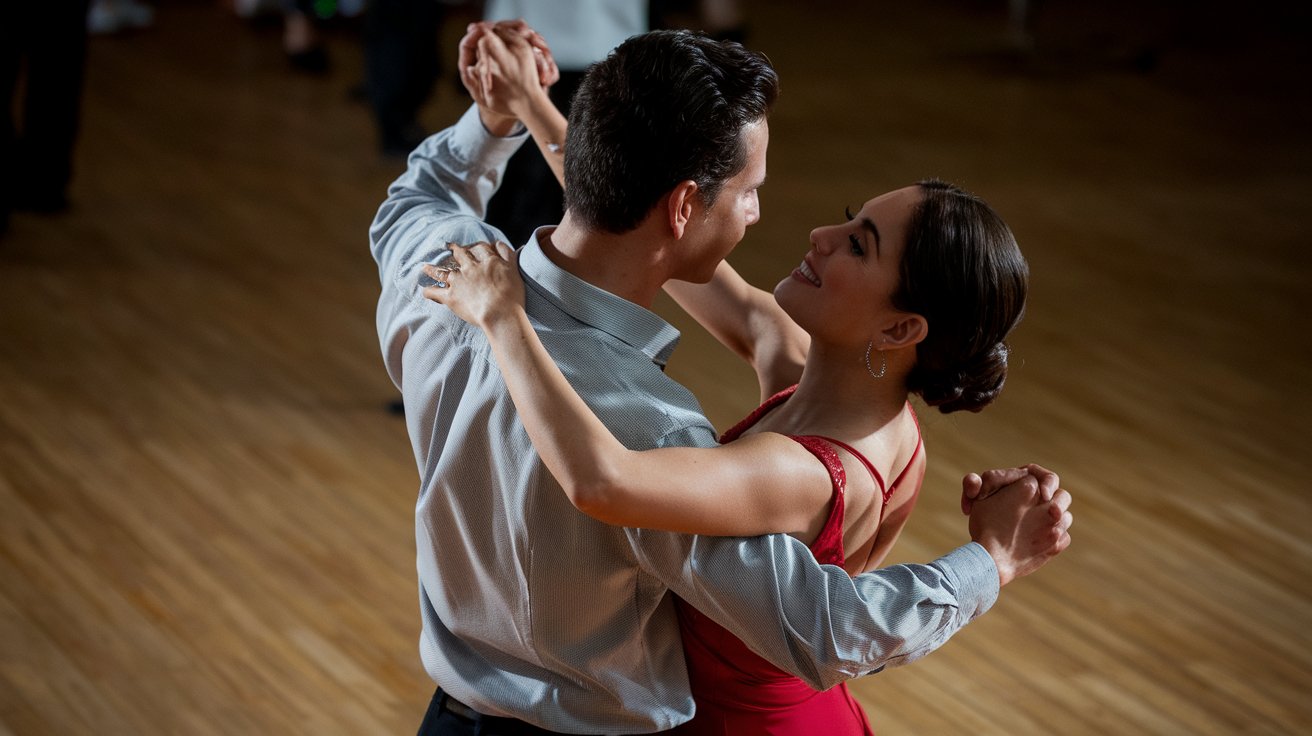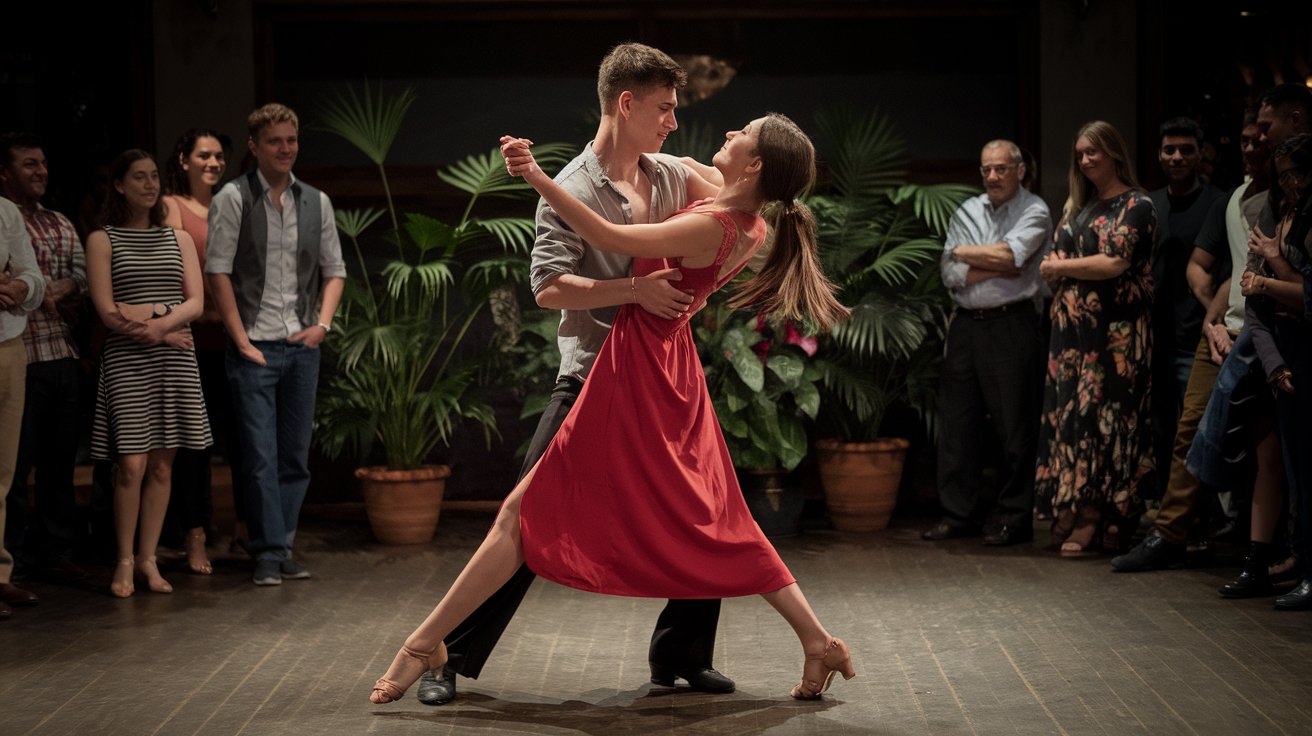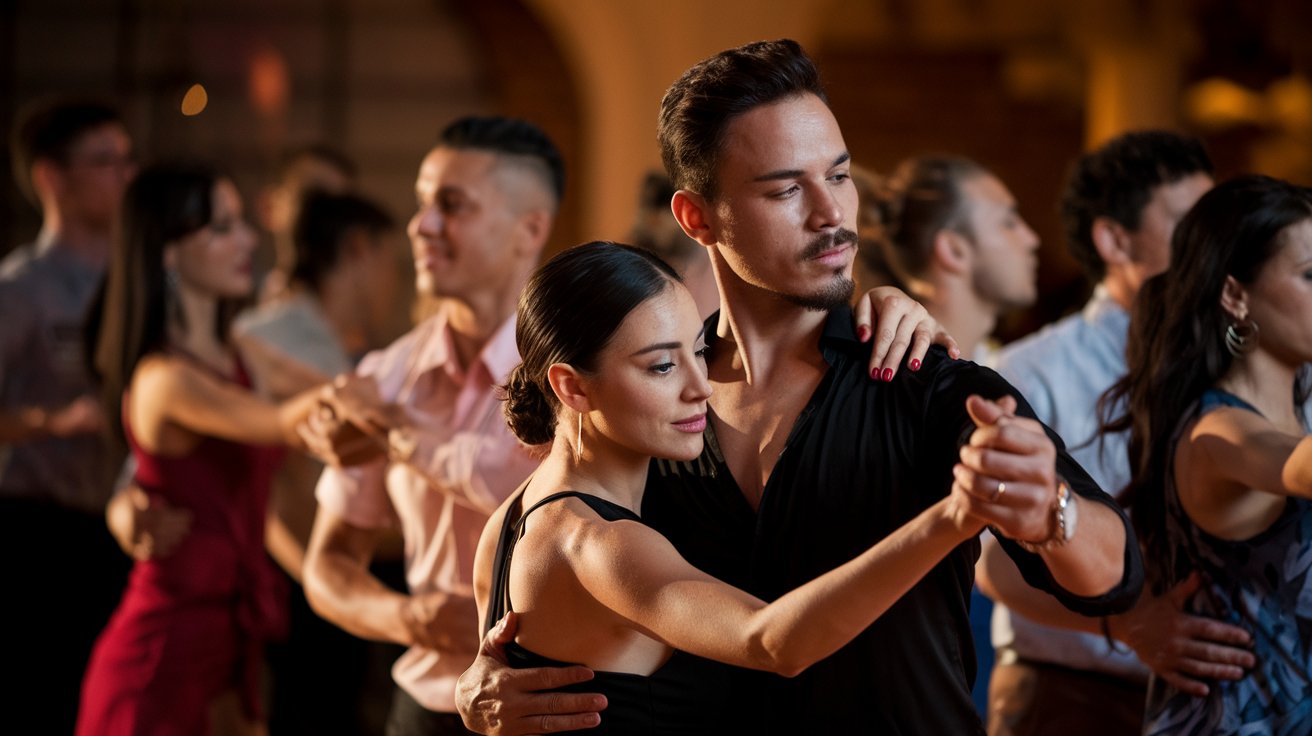
Bachata dance is a sensual, romantic partner dance that originated in the Dominican Republic during the early 1960s. Characterized by its distinctive hip movements, close partner connection, and smooth footwork patterns, bachata has evolved from its humble rural beginnings into one of the most popular Latin dances worldwide. In the United States alone, over 2.3 million people regularly practice bachata in 2026, making it the second most popular Latin dance after salsa in dance studios nationwide.
The History and Origins of Bachata Dance
Bachata dance emerged from the working-class neighborhoods of the Dominican Republic in the 1960s, initially associated with rural cantinas and lower-income communities. The dance developed alongside bachata music, which featured romantic, often melancholic lyrics accompanied by guitar, bongos, maracas, and güira. For decades, bachata was stigmatized by Dominican upper classes who considered it too vulgar and unsophisticated compared to merengue, the country’s national dance.
The transformation of bachata began in the 1980s when musicians like Juan Luis Guerra brought the genre to mainstream audiences with refined arrangements and poetic lyrics. By the 1990s, bachata dance had crossed international borders, reaching the United States where Dominican diaspora communities preserved and promoted the tradition. Today, bachata ranks among the top three most taught Latin dance styles in American dance studios, with approximately 4,200 venues offering regular bachata classes across the country as of 2026.
What Type of Dance Is Bachata
Bachata is classified as a Latin social dance performed in pairs, featuring a basic four-step pattern with a distinctive hip motion on the fourth beat. The dance belongs to the broader category of Caribbean dances and shares some characteristics with other Latin styles like salsa and merengue, though it maintains its own unique identity. Bachata emphasizes close partner connection, smooth weight transfers, and romantic expression through movement.
The dance style is structured around an eight-count musical phrase, with dancers executing steps on beats one through three, followed by a tap or hip lift on the fourth beat. This creates the signature bachata rhythm that distinguishes it from other partner dances. Modern bachata has evolved into several distinct styles including Dominican bachata (traditional), bachata moderna (modern), bachata sensual (emphasizing body waves and dips), and bachata fusion (incorporating elements from other dance forms).
Understanding Bachata Music
Bachata music provides the foundation for the dance, featuring a moderate tempo ranging from 120 to 150 beats per minute. The traditional instrumentation includes the requinto guitar (lead guitar), rhythm guitar, electric bass guitar, bongos, and güira (a metal scraper). Modern bachata productions often incorporate keyboards, synthesizers, and electronic elements while maintaining the genre’s characteristic guitar-driven sound and romantic lyrical themes.
The music typically follows a verse-chorus structure with instrumental interludes that allow dancers to showcase more elaborate footwork and turn patterns. Recognizing the bachata rhythm is essential for dancers, as the distinctive bongo pattern and guitar arpeggios provide clear cues for timing and musical interpretation. In 2026, bachata streaming on platforms like Spotify increased by 34% in the United States, with popular artists including Romeo Santos, Prince Royce, and Aventura driving the genre’s continued mainstream appeal.
Essential Bachata Dance Steps for Beginners
Learning bachata dance for beginners starts with mastering the foundational basic step pattern, which forms the building block for all bachata variations. The standard basic consists of three steps to the side followed by a tap or hip lift, repeated in alternating directions. Leaders typically begin stepping to the left while followers mirror by stepping to the right, creating a synchronized lateral movement across the dance floor.
The bachata box step represents another fundamental pattern where dancers move in a square formation: side, forward, side, tap, then side, back, side, tap. This pattern provides more variety than the basic side-to-side and introduces forward-backward movement that beginners can build upon. Most dance instructors in the United States recommend dedicating at least four to six weeks to perfecting these basic steps before progressing to intermediate patterns and turns, ensuring proper technique and musical timing become second nature.
How to Dance Bachata: The Basic Side-to-Side Step
The fundamental bachata basic step begins with feet together in a neutral standing position. On count one, step to the left with your left foot. On count two, bring your right foot to meet your left foot, transferring weight. On count three, step left again with your left foot. On count four, tap your right foot next to your left while lifting your hip slightly, but do not transfer weight. This creates the characteristic bachata hip movement that defines the dance’s sensual quality.
Repeat this pattern in the opposite direction: step right with the right foot (count five), bring left foot to right (count six), step right again (count seven), and tap left foot with hip lift (count eight). The hip motion should occur naturally as a result of the tap and slight knee bend rather than forced exaggerated movement. American dance instructors emphasize that proper bachata technique requires relaxed knees, natural hip action, and maintaining a smooth, grounded connection to the floor throughout the basic step sequence.
Bachata Footwork Techniques and Variations
Bachata footwork extends beyond the basic step to include various embellishments and styling elements that add personality and musicality to the dance. Common footwork variations include syncopated steps (adding extra quick steps between main beats), crosses (stepping one foot across the other), and kicks or flicks executed during the tap count. Advanced dancers incorporate these variations during musical breaks or to emphasize specific instruments in the bachata arrangement.
Progressive bachata footwork includes traveling steps that move dancers around the dance floor rather than staying in one location. These patterns might involve forward-backward sequences, circular pathways, or diagonal lines that utilize available space while maintaining the fundamental four-step rhythm. In 2026, approximately 67% of intermediate and advanced bachata dancers in U.S. dance communities report regularly practicing footwork drills to develop cleaner technique, faster reflexes, and more creative expression within the dance framework.
Dancing Bachata with a Partner
Learning how to dance bachata in partners introduces the crucial element of physical connection and communication between leader and follower. Unlike solo practice, partner dancing requires awareness of another person’s movement, interpretation of lead signals, and maintenance of appropriate frame and distance. The bachata partner connection can vary from completely open position with minimal contact to very close embrace depending on the style being danced and the comfort level between partners.
Successful partner work in bachata relies on clear leading and attentive following rather than pushing or pulling. Leaders use subtle body weight shifts, gentle hand pressure, and frame positioning to indicate turns, direction changes, and styling moments. Followers maintain their own balance and axis while remaining receptive to these signals, executing movements smoothly without anticipating or back-leading. American dance studios report that developing strong partner connection skills typically requires three to six months of consistent practice for most beginners, with significant improvement occurring once dancers understand both leader and follower roles.
Bachata Open Position Dancing
Open position bachata maintains distance between partners with connection primarily through hand-to-hand contact or single-hand hold. This position allows for greater freedom of movement, easier execution of turn patterns, and clear visibility for both dancers. The open frame is ideal for beginners learning to coordinate footwork and timing without the added complexity of maintaining close body contact, and it remains popular throughout all skill levels for its versatility and comfort.
In open position, leaders typically hold the follower’s right hand with their left hand, creating a comfortable connection point approximately chest height. This position facilitates common bachata moves including right turns, left turns, underarm passes, and free spins while allowing both dancers to maintain their individual styling and footwork variations. Modern bachata choreography frequently alternates between open and closed positions, with dancers spending roughly 40-60% of social dancing in open position according to observational data from U.S. bachata socials in 2026.
Bachata Closed Position Dancing
Closed position bachata brings partners into close embrace with bodies near or touching, creating the intimate, romantic quality that bachata is renowned for. Leaders place their right hand on the follower’s left shoulder blade or mid-back while the left hand holds the follower’s right hand. Followers rest their left hand on the leader’s right shoulder or upper arm, completing the closed frame that allows for subtle body leading and responsive following.
This position emphasizes connection, body awareness, and the sensual nature of bachata through synchronized hip movements, chest-to-chest communication, and shared musical interpretation. Closed position dancing requires greater trust and comfort between partners, making it more common among dancers who know each other or have established dance rapport. The proximity enables advanced techniques like body rolls, dips, and intricate footwork patterns that would be impossible in open position. Approximately 72% of experienced bachata dancers in the United States report preferring closed position for slow, romantic bachata songs while reserving open position for faster, more energetic tracks.
Bachata Turn Patterns and Combinations
Bachata turn patterns add variety, visual interest, and complexity to social dancing beyond the basic step. Common turns include the right turn (follower spins clockwise under leader’s raised left arm), left turn (follower spins counterclockwise), and free turn (follower executes multiple rotations without hand connection). Leaders signal turns through hand positioning, arm elevation, and subtle directional cues delivered on counts preceding the actual turn execution.
More advanced turn combinations link multiple rotations, direction changes, and position transitions into flowing sequences that showcase both technical skill and musicality. Popular combinations include the hammerlock turn (follower’s hand placed behind their back), cross-body lead with turn, and Copa turn variations. American bachata instructors recommend that beginners master single turns with clean technique and proper spotting before attempting multiple rotations or complex combinations. Statistics from U.S. dance competitions in 2026 show that winning routines average 8-12 distinct turn patterns per minute of dancing, demonstrating the importance of diverse turn vocabulary in advanced bachata performance.
Is Bachata Sexier Than Salsa
The question of whether bachata is sexier than salsa reflects the different aesthetic qualities and cultural perceptions of these two popular Latin dances. Bachata is generally considered more sensual and intimate due to its slower tempo, closer partner connection, romantic musical themes, and emphasis on hip movements and body contact. The dance’s structure naturally facilitates prolonged close embrace and synchronized body movement that many perceive as inherently romantic or sensual in nature.
Salsa, by contrast, typically features faster tempo, more energetic footwork, frequent position changes, and greater physical distance between partners during many turn patterns. While salsa can certainly be danced sensually, its traditional social expression emphasizes playful interaction, technical precision, and athletic movement quality. Survey data from 850 Latin dance students across the United States in 2026 indicates that 68% perceive bachata as the more sensual dance, 21% consider salsa equally or more sensual depending on interpretation, and 11% view sensuality as entirely dependent on individual dancers rather than inherent to either style.
How Is Bachata Different From Salsa
Understanding how bachata differs from salsa helps dancers appreciate each style’s unique characteristics and technical requirements. The most fundamental difference lies in timing and rhythm: bachata follows a 4/4 time signature with a four-step basic pattern counted as 1-2-3-tap, while salsa uses a more complex 4/4 structure counted in eight beats with steps on six of those beats (typically 1-2-3, pause, 5-6-7, pause in many salsa styles).
Musically, bachata features guitar-driven arrangements with moderate tempos around 120-140 BPM, while salsa incorporates horn sections, piano montunos, and complex percussion at faster tempos ranging 160-220 BPM. The physical execution also differs significantly: bachata emphasizes hip movement on the fourth count and generally maintains closer partner connection, whereas salsa prioritizes quick foot speed, complex turn patterns, and frequent position changes. Dance anthropologists note that bachata’s Dominican origins and working-class history contrast with salsa’s multi-national Caribbean development and earlier acceptance in middle and upper-class venues, contributing to distinct cultural contexts and social dance conventions surrounding each style in contemporary American Latin dance communities.
What’s Harder: Salsa or Bachata
Determining whether salsa or bachata is harder depends on individual learning style, prior dance experience, and which specific aspects of each dance present challenges. Most dance instructors agree that bachata is generally easier for absolute beginners to start with due to its slower tempo, simpler basic step pattern, and more forgiving timing structure. The four-step basic can be learned in a single lesson, and the moderate music tempo allows newcomers to process information and execute movements without feeling rushed.
Salsa presents greater initial challenges with its faster tempo, more complex basic step variations (including breaking on different beats in different salsa styles), and the intricate timing that requires dancers to hold or pause on certain counts. However, intermediate and advanced dancers often find that bachata’s subtlety becomes challenging—mastering the proper hip motion, maintaining smooth connection while executing body rolls, and interpreting romantic music with appropriate sensibility requires significant refinement. Data from 1,200 dance students surveyed across U.S. dance studios in 2026 shows that 73% found bachata easier to learn initially, but 58% of those who progressed beyond one year rated both dances as equally challenging at advanced levels, simply in different technical and interpretive dimensions.
Is Bachata a Sensual Dance
Yes, bachata is widely recognized as a sensual dance, though the degree of sensuality expressed varies significantly based on style, context, and individual interpretation. The dance’s inherent characteristics—close partner embrace, hip movements, romantic musical themes, and smooth body connection—naturally create an intimate, sensual quality that distinguishes bachata from more energetic or playful partner dances. The evolution of bachata sensual as a distinct substyle in the 2000s explicitly emphasized body waves, dips, and fluid torso movements that enhanced the dance’s romantic and sensual expression.
However, sensuality in bachata exists on a spectrum, and dancers have agency in how they interpret and execute the dance. Traditional Dominican bachata focuses more on footwork complexity and rhythmic precision with moderate sensuality, while modern styles may emphasize closer connection and more pronounced body movement. Social dance etiquette in American bachata communities emphasizes consent, respect for personal boundaries, and clear communication between partners. Professional dance organizations note that approximately 85% of bachata’s perceived sensuality derives from its inherent movement vocabulary and musical context, while 15% depends on individual dancers’ choices regarding distance, connection intensity, and interpretive styling.
Best Bachata Dance Songs for Practice
Selecting appropriate bachata dance songs enhances practice sessions and helps dancers develop musicality, timing, and interpretive skills. For beginners, classic bachata songs with clear, moderate tempos and traditional instrumentation provide the best learning foundation. Excellent choices include “Obsesión” by Aventura (moderate tempo, clear rhythm), “Propuesta Indecente” by Romeo Santos (slower romantic bachata perfect for basic steps), and “Dile al Amor” by Aventura (traditional structure with distinct musical sections).
Intermediate and advanced dancers benefit from varied bachata music that challenges different skills and interpretive abilities. Faster songs like “Promise” by Romeo Santos featuring Usher develop quick footwork and timing precision, while very slow, romantic tracks such as “Eres Mía” by Romeo Santos perfect close connection and body movement. Modern bachata fusion tracks incorporating pop, R&B, or electronic elements expand musical versatility. Spotify data from 2026 shows that American bachata dancers most frequently practice to playlists averaging 28-35 songs with tempo ranges between 115-145 BPM, typically organizing tracks from slower to faster within practice sessions to progressively challenge technical execution.
Finding Bachata Dance Resources and Classes
Locating quality bachata dance classes has become increasingly accessible across the United States, with most metropolitan areas offering multiple venues for instruction and social dancing. Dance studios, Latin nightclubs, community centers, and university programs provide bachata lessons ranging from beginner fundamentals to advanced performance training. Online platforms have expanded access significantly, with virtual instruction allowing dancers in rural areas or those with scheduling constraints to learn from internationally recognized instructors.
YouTube bachata dance tutorials offer free educational content, with popular channels like Addicted2Bachata, Dance Vida, and various professional dancer channels providing step breakdowns, styling tips, and full routine demonstrations. However, in-person instruction remains superior for developing proper technique, receiving personalized feedback, and building social dance skills through partner practice. As of 2026, the average cost for group bachata classes in U.S. cities ranges from eighteen to thirty-five dollars per session, with unlimited monthly memberships typically priced between eighty and one hundred fifty dollars. Private instruction costs between sixty and one hundred twenty dollars per hour depending on instructor credentials and geographic location, representing a worthwhile investment for dancers seeking accelerated progress or specialized technique refinement.
Bachata Dance Benefits and Community
Engaging with bachata dance provides numerous physical, mental, and social benefits that extend beyond learning movement patterns. Physically, regular bachata dancing offers cardiovascular exercise, improved coordination, enhanced balance, increased flexibility, and better posture. A typical two-hour bachata social dancing session burns approximately 300-450 calories while strengthening leg muscles, core stability, and cardiovascular endurance through sustained moderate-intensity movement.
The social dimension of bachata creates community connections, cross-cultural exchange, and opportunities for meaningful interaction in an era of increasing digital isolation. Bachata communities in American cities foster inclusive environments where people from diverse backgrounds unite through shared passion for music and dance. Mental health benefits include stress reduction, improved confidence, enhanced creativity, and cognitive stimulation from learning complex movement patterns and musical interpretation. Research from dance therapy programs in 2026 indicates that participants in regular partner dance activities, including bachata, report 42% higher satisfaction with social connections and 38% lower perceived stress levels compared to non-dancers, highlighting the holistic wellness value of engaging with this vibrant dance tradition.
Related video about what is bachata dance
This video complements the article information with a practical visual demonstration.
Frequently Asked Questions
What is bachata dance and where did it originate?
Bachata dance is a sensual Latin partner dance that originated in the Dominican Republic during the 1960s. It features a four-step pattern with distinctive hip movements on the fourth count, danced to romantic guitar-driven music. Initially associated with rural working-class communities, bachata evolved from a stigmatized cultural expression into one of the world’s most popular social dances, now practiced by millions globally including over 2.3 million regular dancers in the United States as of 2026.
Is bachata easier to learn than salsa for beginners?
Yes, bachata is generally easier for beginners than salsa due to its slower tempo, simpler four-step basic pattern, and more forgiving timing structure. The moderate music speed around 120-140 BPM allows newcomers to process information comfortably, while salsa’s faster pace (160-220 BPM) and more complex timing present greater initial challenges. Approximately 73% of dance students surveyed in U.S. studios in 2026 found bachata easier to start with, though both dances become equally challenging at advanced levels in different technical dimensions.
What makes bachata dance sensual compared to other Latin dances?
Bachata’s sensual quality stems from its close partner embrace, smooth hip movements, romantic musical themes, and sustained body connection throughout the dance. Unlike faster, more energetic Latin dances, bachata’s moderate tempo and structure naturally facilitate intimate positioning and synchronized movement between partners. The evolution of bachata sensual as a distinct substyle further emphasized body waves, dips, and fluid torso movements, though dancers maintain agency over how they interpret and express sensuality within respectful boundaries and social dance etiquette.
How long does it take to learn bachata dance basics?
Most beginners can learn the fundamental bachata basic step in one to two lessons, typically within two to four hours of instruction. However, developing clean technique, proper hip motion, comfortable partner connection, and basic turn patterns usually requires four to six weeks of consistent practice with weekly classes. Achieving intermediate proficiency with varied footwork, smooth leading or following, and musical interpretation typically takes three to six months of regular practice and social dancing according to progression data from American dance studios in 2026.
What is the difference between bachata and merengue dance?
Bachata and merengue are distinct Dominican dances with different rhythms, steps, and characteristics. Bachata uses a four-step pattern with a hip movement on count four, danced to moderate-tempo guitar music (120-140 BPM) with romantic themes. Merengue features a simpler two-step marching pattern, danced to faster music (120-180 BPM) driven by accordion and percussion with more upbeat, celebratory themes. Merengue maintains consistent walking steps throughout, while bachata incorporates the distinctive tap and hip lift that defines its signature movement quality and sensual aesthetic.
Where can I find bachata dance classes near me in the United States?
Approximately 4,200 venues across the United States offer bachata dance classes as of 2026, including dedicated dance studios, Latin nightclubs with instruction, community centers, and university programs. Most metropolitan areas have multiple options with group classes ranging from eighteen to thirty-five dollars per session. To find classes, search online for “bachata lessons [your city],” check platforms like DancePlug or Meetup for local dance communities, visit Latin nightclubs that typically offer pre-social instruction, or explore YouTube bachata dance channels for free online instruction if in-person options are unavailable in your area.
| Key Aspect | Important Details | Benefit |
|---|---|---|
| Origin | Dominican Republic, 1960s working-class communities | Rich cultural heritage and authentic Latin dance experience |
| Basic Pattern | Four-step sequence: step-step-step-tap with hip movement | Easy to learn for beginners, accessible entry point |
| Music Tempo | 120-150 BPM with guitar-driven arrangements | Moderate pace allows comfortable learning and romantic expression |
| Partner Connection | Close embrace with open position alternatives | Develops trust, communication, and social connection skills |
| Learning Timeline | Basics in 4-6 weeks, intermediate in 3-6 months | Achievable progression with consistent practice |
| Health Benefits | 300-450 calories per session, improved coordination | Cardiovascular fitness, stress reduction, mental wellness |
| Popularity in US | 2.3 million regular dancers, 4,200+ venues nationwide | Accessible community, numerous learning opportunities |
| Class Costs | $18-35 per group class, $80-150 monthly unlimited | Affordable options for various budgets and commitment levels |