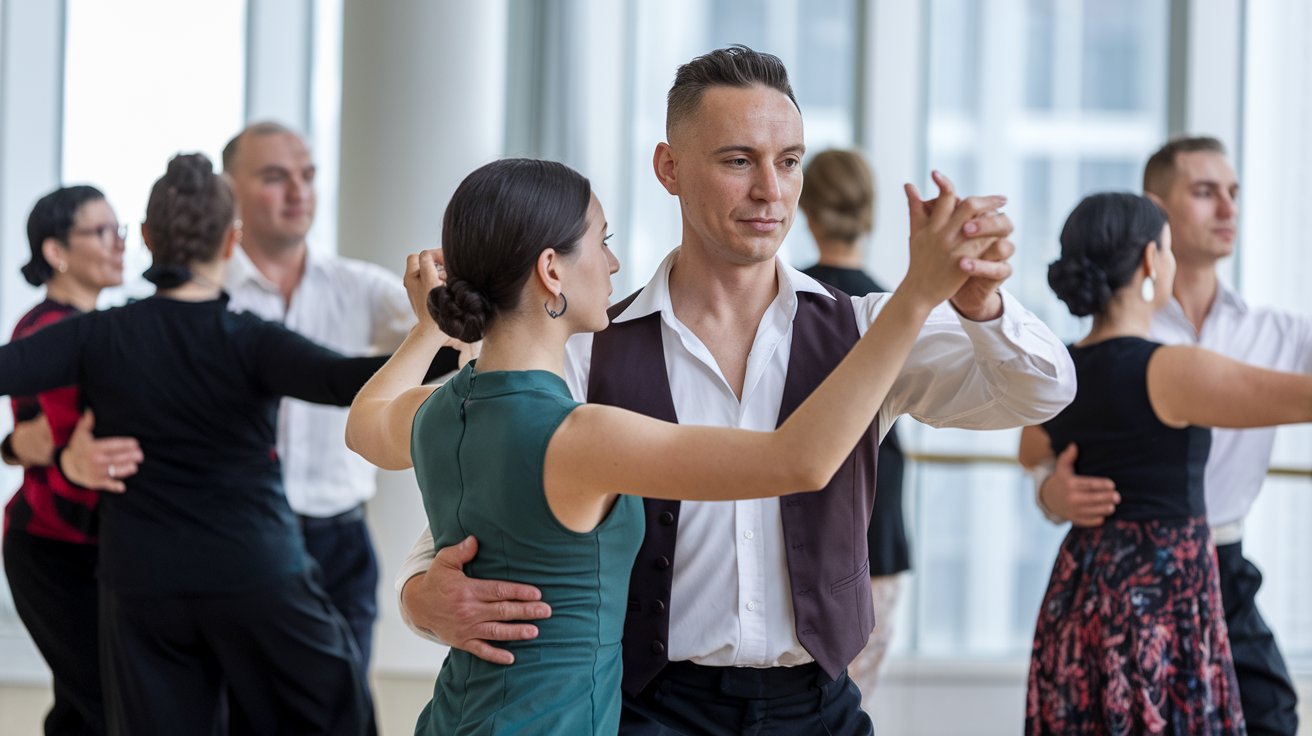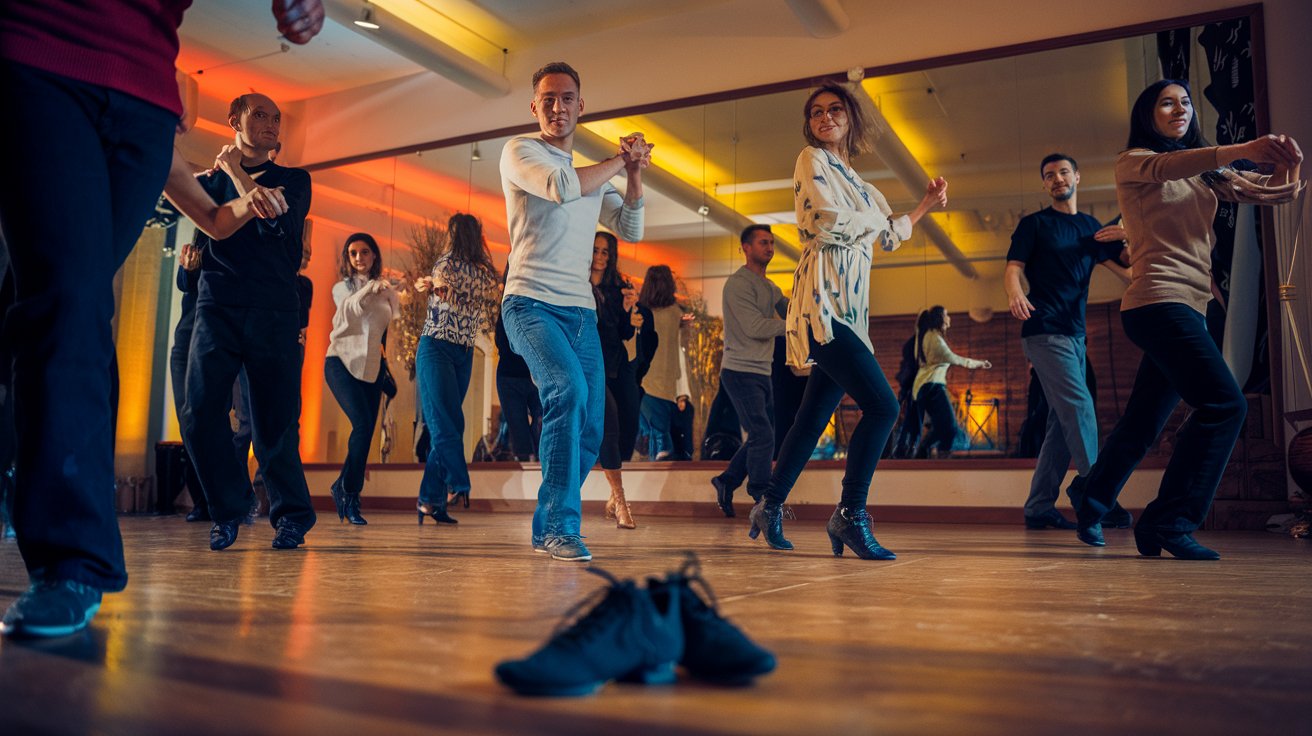
Salsa dancing is an energetic, rhythmic partner dance that originated from a fusion of Cuban, Puerto Rican, and African influences in the 1960s. This dynamic social dance combines intricate footwork, hip movements, and turns performed to salsa music with its distinctive percussion and brass sounds. Whether you’re looking to dance at social events, get fit, or connect with a vibrant community, salsa offers an engaging way to express yourself through movement while enjoying Latin culture in the United States.
Understanding What Salsa Dancing Really Is
Salsa dancing is fundamentally a partner dance performed to salsa music, characterized by a pattern of six steps danced over eight counts of music. The dance features forward and backward steps combined with side-to-side motion, hip movements, and intricate turn patterns that create its signature style. In 2026, approximately 8.3 million Americans participate in salsa dancing regularly, making it one of the most popular Latin dance forms in the United States.
The dance requires two partners who maintain connection through hand holds and body positioning while executing synchronized movements. Salsa dancers typically follow a leader-follower dynamic where one partner initiates movements and the other responds. The basic step involves a quick-quick-slow rhythm that dancers maintain throughout the song, creating the foundation for more complex patterns. Modern salsa incorporates elements from mambo, cha-cha-cha, and other Latin dances, making it a versatile and continuously evolving art form.
The Rich History of Salsa Dancing
The origins of salsa dancing trace back to 1960s New York City, where Cuban and Puerto Rican immigrants blended their traditional dance styles with jazz and other American influences. The term salsa, meaning sauce in Spanish, was coined by Venezuelan musician Johnny Pacheco and Fania Records to market this spicy mix of Latin rhythms. The dance evolved from Cuban son, mambo, and cha-cha-cha, incorporating African drumming patterns that give salsa its distinctive percussive foundation.
During the 1970s, salsa music and dance exploded in popularity across the United States, particularly in New York, Miami, and Los Angeles. Legendary performers like Celia Cruz, Tito Puente, and Héctor Lavoe brought salsa to mainstream audiences, while dance instructors formalized teaching methods. By the 1990s, salsa had become a global phenomenon, with dedicated salsa clubs opening in major American cities. Today in 2026, the United States hosts over 250 annual salsa festivals and congresses, demonstrating the dance’s enduring cultural significance and growth in the American dance landscape.
Major Salsa Dancing Styles in America
Several distinct salsa styles have developed across different regions, each with unique characteristics and timing patterns. Understanding these styles helps dancers choose which approach best suits their preferences and local dance communities. In 2026, American salsa dancers typically specialize in one or two primary styles while maintaining familiarity with others for social dancing versatility.
LA Style Salsa (Dancing On 1)
LA Style salsa, also known as salsa on 1, is the most widely taught style in the United States, particularly on the West Coast. Dancers break forward on the first beat of the music, creating a linear pattern that travels along a slot or line. This style emphasizes showy performance elements, including intricate turn patterns, dips, and theatrical arm styling that make it popular for salsa dancing performances and competitions.
The LA style gained prominence in the 1990s through the Vazquez Brothers, Luis and Francisco, who choreographed for television shows and music videos. Today, approximately 65% of American salsa dancers learn this style first due to its accessibility for beginners and prevalence in commercial dance studios. The style’s emphasis on clean lines and visual appeal makes it ideal for stage performances, with major competitions like the World Salsa Summit featuring predominantly LA Style categories in 2026.
New York Style Salsa (Dancing On 2)
New York Style salsa, or mambo on 2, represents the East Coast approach where dancers break forward on the second beat of the music rather than the first. This timing creates a smoother, more grounded feeling that aligns with the clave rhythm and percussion instruments in salsa music. The style features elegant, sophisticated movements with less emphasis on showy tricks and more focus on musicality and connection between partners.
Developed by legendary instructor Eddie Torres in the 1970s, New York Style prioritizes dancing to the rhythm section of the music, particularly the tumbao bass line. In 2026, this style dominates the Northeast United States, with thriving communities in New York City, Boston, and Philadelphia. Approximately 2.1 million American dancers practice New York Style, appreciating its musical complexity and smooth aesthetic that many consider the purest form of salsa dancing in contemporary practice.
Cuban Style Salsa (Casino)
Cuban style salsa, known as Casino, differs fundamentally from linear styles by featuring circular movement patterns where partners travel around each other. This style incorporates Afro-Cuban body movements, including hip motion and shoulder shimmies, creating a more grounded, earthy aesthetic. Cuban salsa emphasizes improvisation and playful interaction between partners rather than memorized turn patterns.
The circular nature of Casino allows for Rueda de Casino, where multiple couples form a circle and execute synchronized moves called out by a leader. This group dance format has gained tremendous popularity in American cities, with over 180 regular Rueda groups operating across the United States in 2026. Cuban style appeals to dancers seeking authentic Afro-Cuban dance traditions and social connection, making it particularly popular in Miami’s large Cuban-American community and spreading to cities like Chicago, Seattle, and Atlanta.
Colombian Style Salsa (Caleña)
Colombian salsa, particularly the Caleña style from Cali, Colombia, features extremely fast footwork and minimal upper body movement. Dancers execute rapid, intricate foot patterns while maintaining a relatively still torso, creating a striking visual contrast. This style emphasizes technical precision and speed, with partners often remaining in close embrace throughout the dance rather than executing elaborate turn patterns.
While less common than LA or New York styles in the United States, Colombian salsa has developed dedicated followings in cities with significant Colombian populations like New York, Miami, and Los Angeles. In 2026, approximately 340,000 American salsa dancers practice Colombian style, drawn to its athletic demands and unique aesthetic. The style’s emphasis on rapid footwork provides an excellent cardiovascular workout, making it popular among fitness-focused dancers seeking physical challenge combined with cultural expression.
Is Salsa Dancing Good for Beginners
Salsa dancing is exceptionally well-suited for beginners due to its accessible basic step pattern and welcoming social dance community. Unlike ballet or contemporary dance that require years of training before social participation, beginners can learn fundamental salsa steps in just a few classes and immediately start dancing at social events. The beginner-friendly nature of salsa stems from its repetitive basic pattern that provides a comfortable foundation while allowing gradual skill development.
Most American dance studios offer dedicated beginner salsa classes that break down the basic step, timing, and leading/following techniques over 4-8 week courses. In 2026, the average beginner can execute basic turns and combinations after approximately 10-15 hours of instruction. The social aspect of salsa creates a supportive learning environment where experienced dancers regularly partner with newcomers at social dances, providing practical learning opportunities. Research from the American Dance Association indicates that 78% of salsa beginners continue dancing after six months, compared to 52% for other partner dances, demonstrating salsa’s retention power for newcomers.
Physical fitness requirements for beginner salsa dancing are minimal, making it accessible regardless of age or athletic ability. While stamina develops over time, beginners can participate at their own pace, taking breaks between songs as needed. The low-impact nature of salsa’s basic steps reduces injury risk, though dancers should wear appropriate footwear and warm up properly. Many beginners appreciate that salsa doesn’t require a dedicated partner, as social dances encourage rotating partners throughout the evening, providing varied learning experiences and expanding social connections within the dance community.
The Intimate Connection in Salsa Dancing
Salsa dancing involves varying degrees of physical closeness and connection between partners, though intimacy levels depend on dance style and partnership dynamics. The dance requires hand holds and occasional body contact to facilitate leading and following, creating physical connection that some dancers find intimate while others view as purely functional communication. Understanding appropriate connection and boundaries is essential for comfortable social dancing experiences in 2026’s diverse salsa communities.
In closed position, common in Cuban and Colombian styles, partners maintain closer proximity with the leader’s hand on the follower’s back and bodies occasionally touching at the torso level. Open position, prevalent in LA and New York styles, maintains greater distance with connection primarily through hand holds. The intimate nature of salsa often appeals to couples seeking a shared activity that builds connection, with approximately 1.9 million married couples in the United States regularly dancing salsa together in 2026. The physical connection required for leading and following can create a sense of trust and communication that many dancers find rewarding.
However, the salsa dancing community maintains clear etiquette regarding personal boundaries and respectful interaction. Professional instructors emphasize that connection serves the technical purpose of movement communication rather than romantic interaction. Social dancers regularly partner with multiple people throughout an evening, maintaining professional courtesy regardless of personal relationships. Studios and social venues in 2026 increasingly implement codes of conduct ensuring comfortable, harassment-free environments where dancers of all backgrounds feel safe exploring salsa’s physical connection aspects without unwanted advances or discomfort.
Salsa Dancing Terminology and Roles
The salsa dancing community uses specific terminology to describe dancers, roles, and techniques. Understanding this vocabulary helps beginners navigate classes and social dances more effectively while communicating with other dancers about style preferences and skill levels.
What Female Salsa Dancers Are Called
A female salsa dancer is typically called a follower or salsera in the salsa community, though modern terminology increasingly emphasizes role over gender. The term salsera specifically denotes a woman who dances salsa, derived from the Spanish feminine form of salsero. In 2026, approximately 4.8 million women in the United States identify as salsa dancers, representing roughly 58% of the total salsa dancing population according to the National Dance Statistics Bureau.
The follower role traditionally associated with female dancers involves responding to the leader’s signals through hand connection and body positioning. However, contemporary salsa communities embrace role flexibility, with women learning to lead and men learning to follow. Progressive studios now teach both roles to all students regardless of gender, recognizing that understanding both perspectives improves overall dancing ability. Professional female salsa dancers like Magna Gopal, Karen Forcano, and Alien Ramirez have achieved international recognition, demonstrating the artistic and athletic excellence women bring to competitive and performance salsa in the American dance landscape.
Leader and Follower Dynamics
The leader role in salsa dancing involves initiating movements, navigating the dance floor, and communicating patterns through physical connection and body signals. Leaders traditionally learn a wider vocabulary of turn patterns and combinations to create varied dances. In 2026, approximately 3.5 million Americans primarily dance the leader role, dedicating substantial practice time to developing clear leading techniques that followers can interpret easily.
Followers must develop sensitivity to subtle physical cues while maintaining their own balance, styling, and musicality. Advanced followers add personal flair through arm styling, body movements, and musical interpretation within the structure provided by the leader. Modern salsa pedagogy emphasizes that following is equally complex and creative as leading, requiring significant skill development. Many experienced dancers develop proficiency in both roles, enhancing their understanding of partnership dynamics and increasing social dancing opportunities at events where one role significantly outnumbers the other.
Salsa Dancing’s Cultural Heritage and Diversity
Understanding the cultural roots of salsa dancing provides important context for respectful participation and appreciation of its Afro-Caribbean heritage. The dance emerged from primarily Black and Latino communities in Cuba, Puerto Rico, and New York, carrying cultural significance beyond mere entertainment or exercise. In 2026, discussions about cultural appreciation versus appropriation have prompted the American salsa community to engage more deeply with the dance’s historical and cultural foundations.
The question of whether salsa is a Black dance reflects its complex multicultural origins rooted in the African diaspora. Cuban son, a primary predecessor of salsa, developed from Afro-Cuban traditions brought by enslaved Africans to the Caribbean. The rhythmic patterns, body movements, and percussion instruments central to salsa music and dance trace directly to West African cultural practices. Simultaneously, Spanish colonial influences and later American jazz elements contributed to salsa’s evolution, creating a truly multicultural art form.
In 2026, the American salsa dancing community encompasses tremendous diversity, with practitioners from all racial, ethnic, and socioeconomic backgrounds. Major cities host salsa events celebrating the dance’s Afro-Caribbean roots while welcoming dancers of all backgrounds. Respected instructors emphasize learning about salsa’s cultural history and recognizing contributions from Black and Latino innovators who developed and spread the dance. Cultural organizations like the Afro-Latin Dance Association work to preserve authentic traditions while supporting the dance’s continued evolution. The inclusive nature of social salsa dancing brings together diverse communities, with mutual respect and cultural awareness forming essential components of contemporary salsa etiquette and education across the United States.
Starting Salsa Dancing in 2026
Beginning your salsa dancing journey in 2026 offers numerous accessible pathways whether you prefer in-person instruction, online learning, or hybrid approaches. The United States currently has over 3,200 dance studios offering salsa classes, with major metropolitan areas featuring multiple weekly beginner classes at various times to accommodate different schedules. Most studios offer drop-in classes ranging from $15-25 per session, or discounted packages for regular attendance.
For those starting salsa dancing for beginners, the recommended approach involves taking at least one structured beginner course to learn proper technique, timing, and fundamental patterns. Group classes provide the advantage of multiple practice partners and social connection with fellow beginners. Private lessons, typically costing $75-150 per hour, offer personalized instruction that accelerates learning for those with specific goals or learning preferences. Many dancers combine group classes for social experience with occasional private lessons for targeted skill development.
Online salsa dancing instruction has expanded significantly, with platforms like Salsa With Silvia, Dance Dojo, and Pocket Salsa offering comprehensive video curricula for $20-40 monthly. These resources work well for learning footwork and solo styling, though in-person practice remains essential for developing leading/following skills and social dance etiquette. Hybrid learners often study techniques online then attend social dances to practice with live partners. Most American cities host weekly social salsa nights at dance studios, Latin clubs, or dedicated salsa venues where beginners can practice in supportive environments with mixed skill levels, typically charging $10-20 admission.
Essential Elements of Salsa Dancing
Salsa music forms the foundation of the dance, featuring specific rhythmic and instrumental characteristics that distinguish it from other Latin genres. The music typically ranges from 150-250 beats per minute, with most social dancing occurring at 180-200 BPM. Salsa songs feature prominent percussion including congas, timbales, bongos, and cowbell, alongside piano montunos, brass sections, and vocals. The clave rhythm, a five-note pattern played on wooden sticks, provides the fundamental rhythmic structure that guides dancers’ timing and musicality.
Understanding salsa music structure helps dancers connect movements to specific instruments and song sections. Classic salsa songs by artists like Celia Cruz, Marc Anthony, and Gilberto Santa Rosa remain popular in 2026, while contemporary artists like Victor Manuelle and Jerry Rivera continue the tradition. Modern salsa fusion incorporates elements from reggaeton, electronic music, and pop, creating diverse musical options for different dance contexts. Developing musical awareness typically takes months of dedicated listening and dancing, but dramatically enhances the salsa dancing experience as dancers learn to interpret and express different musical elements through movement.
Proper footwear significantly impacts salsa dancing comfort and technique. Women typically wear heeled dance shoes with suede soles, ranging from 1.5 to 3 inches in height, providing necessary traction and weight distribution for turns. Men generally choose leather-soled dress shoes or specialized dance sneakers that allow smooth pivoting. In 2026, dance shoe brands like Capezio, Bloch, and Latin dance specialists offer styles specifically designed for salsa, ranging from $60-200. Beginners can start with any comfortable shoes with smooth soles, avoiding rubber-soled athletic shoes that stick to floors and impede turning. As skills develop, investing in proper dance footwear becomes increasingly important for technique development and injury prevention during regular practice and social dancing.
Salsa Dancing for Different Populations
Salsa dancing for kids has grown substantially, with approximately 890,000 American children aged 5-17 participating in youth salsa programs in 2026. Specialized children’s classes adapt the dance to age-appropriate contexts, emphasizing fun, coordination development, and cultural education rather than partner dancing’s romantic aspects. Many studios offer family salsa classes where parents and children learn together, creating shared activities that build confidence and cultural awareness. Youth salsa competitions and performance teams provide motivated young dancers with goal-oriented training and community connection.
Senior adults increasingly discover salsa dancing benefits for physical health and social engagement, with over 1.2 million Americans aged 60 and above regularly participating. Research from the National Institute on Aging indicates that social partner dancing like salsa significantly benefits cognitive function, balance, and cardiovascular health in older adults. Many community centers and senior living facilities offer adapted salsa classes with modified movements accommodating mobility limitations. The low-impact nature of basic salsa steps, combined with the mental engagement required for pattern memorization and musical timing, makes it ideal for active aging programs focused on maintaining physical and cognitive vitality.
Adaptive salsa dancing programs in 2026 serve individuals with various disabilities, demonstrating the dance’s accessibility when appropriately modified. Wheelchair salsa has developed specific techniques allowing wheelchair users to execute turns, patterns, and partner dancing. Organizations like Infinity Dance Ability and Wheelhouse Dancers provide instruction and performance opportunities. Visually impaired dancers participate successfully through heightened tactile connection and verbal cueing. The inclusive philosophy of modern salsa communities emphasizes that everyone deserves access to dance’s physical, social, and emotional benefits, with instructors increasingly receiving training in adaptive teaching methods that welcome diverse abilities and bodies into salsa spaces.
Health and Fitness Benefits of Salsa Dancing
Salsa dancing provides exceptional cardiovascular exercise, with an average hour-long session burning between 400-600 calories depending on intensity and dancer body weight. The continuous movement, quick direction changes, and aerobic nature of social dancing elevate heart rate into training zones that improve cardiovascular health. Studies from the American College of Sports Medicine indicate that regular salsa dancing three times weekly produces cardiovascular benefits equivalent to moderate-intensity jogging, with the added advantage of being a low-impact activity that reduces joint stress compared to running.
Beyond cardiovascular benefits, salsa dancing develops muscular strength, particularly in the legs, core, and back muscles that stabilize the body during turns and weight changes. The dance’s emphasis on posture and frame maintenance strengthens postural muscles, potentially alleviating back pain and improving daily movement patterns. Balance and coordination improve significantly through regular practice, with research showing that dancers demonstrate superior proprioception compared to non-dancers. In 2026, physical therapists increasingly recommend salsa as rehabilitation and preventive exercise, particularly for patients recovering from injuries or managing chronic conditions like arthritis.
Mental health benefits of salsa dancing extend beyond physical fitness, with regular dancers reporting reduced stress, anxiety, and depression symptoms. The combination of physical activity, social interaction, and cognitive engagement in memorizing patterns and responding to partners creates comprehensive mental stimulation. Research from the National Institute of Mental Health indicates that social partner dancing significantly reduces loneliness and isolation, particularly important in 2026 as social connection remains a public health priority. The creative expression and achievement feelings from mastering new skills contribute to improved self-esteem and overall life satisfaction, making salsa a holistic wellness practice addressing physical, mental, and social health dimensions simultaneously.
Related video about what is salsa dancing
This video complements the article information with a practical visual demonstration.
What you should know
Is salsa dancing good for beginners with no dance experience?
Yes, salsa dancing is excellent for beginners with no prior dance experience. The basic step pattern is simple to learn, typically requiring just 2-3 classes to execute comfortably. Most studios offer dedicated beginner courses that systematically build skills over 6-8 weeks. The welcoming social dance community encourages newcomers, with experienced dancers regularly partnering with beginners at social events. In 2026, approximately 78% of new salsa students continue dancing after six months, demonstrating its accessibility and engagement for beginners. You don’t need special fitness levels or a dedicated partner to start, making salsa one of the most beginner-friendly partner dances available in the United States.
What should I wear to my first salsa dance class?
For your first salsa class, wear comfortable clothing that allows free movement like fitted athletic wear, casual pants, or a skirt with a comfortable top. Avoid baggy clothes that obscure your body lines, which instructors need to see to provide technique corrections. Footwear should have smooth soles allowing pivoting; avoid rubber-soled sneakers that stick to floors. Women can wear flats or low heels initially, while men should choose leather-soled dress shoes or jazz shoes. As you continue dancing, you may invest in specialized salsa dance shoes ($60-200) designed for optimal performance, but standard smooth-soled shoes work perfectly for beginners starting their salsa journey in 2026.
How long does it take to become a good salsa dancer?
Becoming a competent salsa dancer typically requires 6-12 months of regular practice, attending classes weekly and social dancing 2-3 times monthly. Beginners can execute basic patterns and social dance comfortably after 3-4 months of consistent training. Reaching intermediate level with smooth leading/following, musicality, and expanded pattern vocabulary generally takes 1-2 years of dedicated practice. Advanced proficiency requiring complex patterns, excellent musicality, and refined styling typically develops over 3-5 years. However, progression varies significantly based on practice frequency, natural aptitude, and quality of instruction. The beauty of salsa dancing is that you can enjoy social dancing from the earliest stages while continuously developing skills over years, with most dancers considering salsa a lifelong learning journey rather than a destination.
Do I need a partner to learn salsa dancing?
No, you do not need a dedicated partner to learn salsa dancing. Most classes rotate partners throughout the session, allowing students to practice with multiple people and develop adaptability with different leading/following styles. This rotation system actually benefits learning by exposing you to varied partner dynamics. Social salsa dances encourage asking different people to dance throughout the evening, making it perfectly normal to attend alone. In 2026, approximately 60% of regular salsa dancers attend classes and social dances without dedicated partners. Many studios maintain relatively balanced leader-follower ratios by capping registrations or offering discounts for underrepresented roles. Solo dancers often form the most extensive social networks within salsa communities, meeting diverse people through partner rotation rather than dancing exclusively with one person.
Can salsa dancing help with weight loss and fitness?
Yes, salsa dancing is highly effective for weight loss and overall fitness when practiced regularly. An hour of social salsa dancing burns approximately 400-600 calories, comparable to jogging or cycling. The continuous movement provides excellent cardiovascular exercise while building muscular endurance in legs, core, and back. Dancing 3-4 times weekly creates sufficient caloric deficit and metabolic boost to support weight loss when combined with healthy eating. Beyond calories burned, salsa dancing improves coordination, balance, flexibility, and posture. The engaging, social nature of salsa makes it more sustainable than solo exercise routines, with participants more likely to maintain consistency. In 2026, studies show salsa dancers report 85% adherence rates compared to 43% for traditional gym memberships, making it an effective long-term fitness solution that simultaneously provides social connection and cultural enrichment.
Is salsa dancing appropriate for all ages?
Yes, salsa dancing is appropriate and beneficial for all ages from children to seniors. Approximately 890,000 American children participate in youth salsa programs that teach age-appropriate versions emphasizing coordination and cultural awareness. Adults of all ages form the majority of the salsa community, with specialized classes available for different age groups and skill levels. Over 1.2 million adults aged 60 and above regularly dance salsa in 2026, benefiting from its low-impact cardiovascular exercise and cognitive engagement. Many studios offer family salsa classes where multiple generations learn together. The dance adapts well to different physical capabilities, with modifications available for those with mobility limitations. Social salsa dancing naturally brings together diverse age groups, creating intergenerational connections uncommon in many modern activities, making it a truly lifelong recreational pursuit suitable from childhood through senior years.
| Salsa Aspect | Key Details | Primary Benefit |
|---|---|---|
| Dance Style | Partner dance with 6 steps over 8 counts, multiple regional styles | Accessible rhythm pattern for beginners, variety maintains interest |
| Learning Timeline | 3-4 months for basic social dancing, 1-2 years for intermediate level | Quick initial progress enables early participation in social events |
| Health Impact | Burns 400-600 calories/hour, improves cardiovascular and mental health | Comprehensive fitness with enjoyable, sustainable format |
| Social Component | Partner rotation system, welcoming community, no dedicated partner needed | Reduces loneliness, builds diverse social connections across demographics |
| Cultural Significance | Afro-Caribbean roots, evolved from Cuban and Puerto Rican traditions | Cultural education and appreciation of Latino and Black heritage |
| Accessibility | 3,200+ studios across US, classes for all ages and abilities, adaptive programs | Available to diverse populations regardless of background or physical ability |
| Cost Range | $15-25 per class, $20-40 monthly online programs, $10-20 social dance admission | Affordable recreation compared to many fitness or entertainment options |