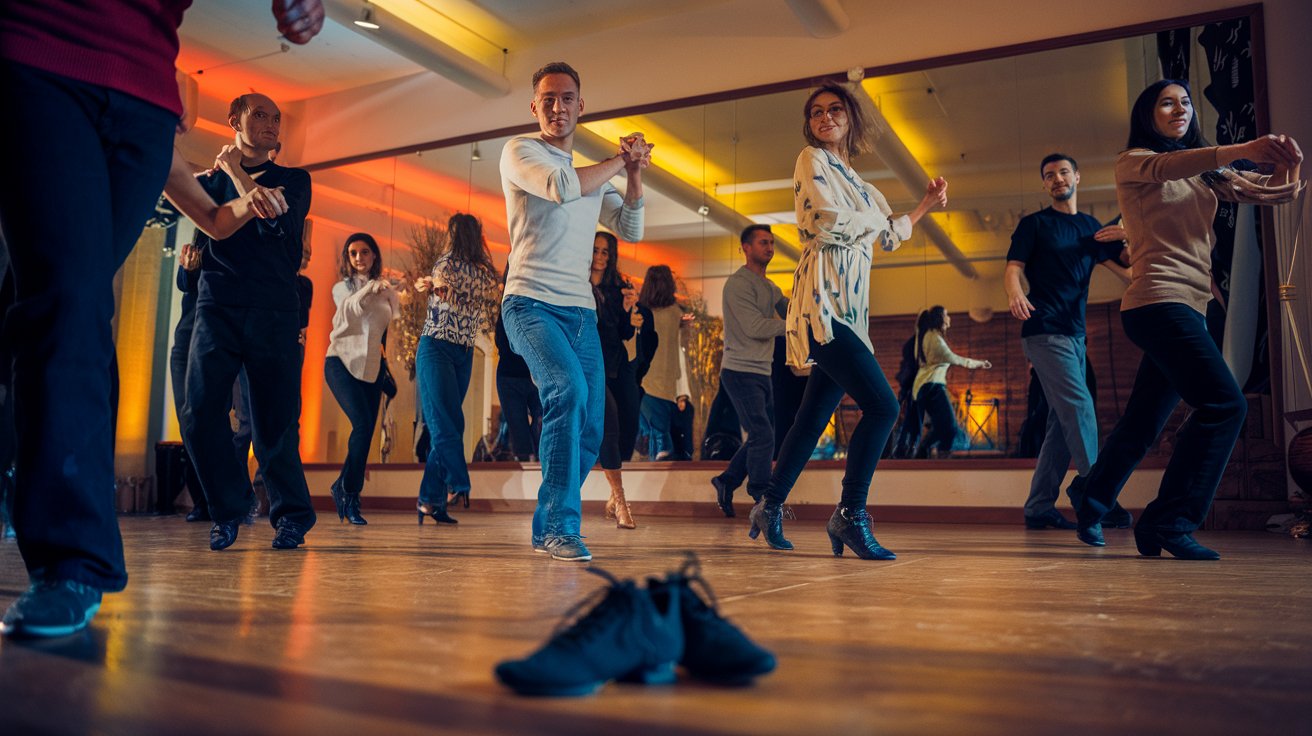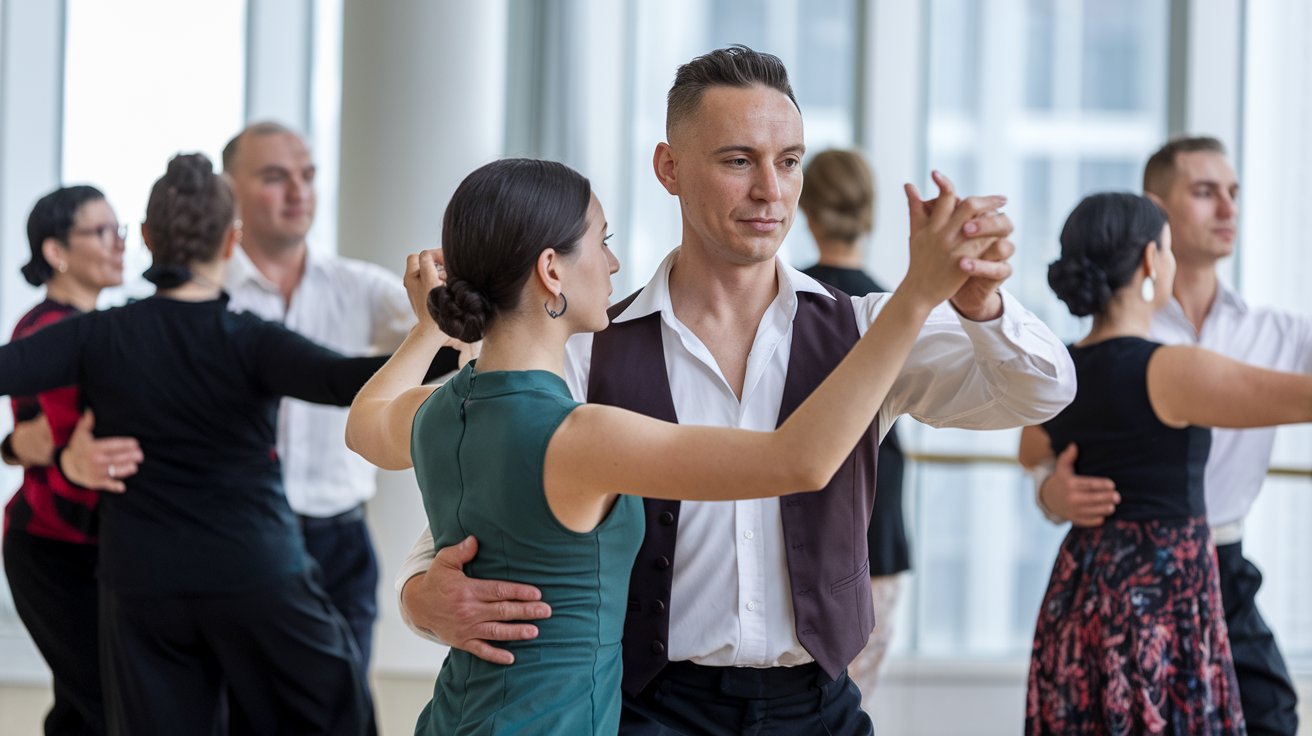
Salsa dancing originates from a rich blend of African rhythms, Spanish colonial influences, and indigenous Caribbean traditions that converged primarily in Cuba during the early 20th century. This vibrant Latin dance emerged from cultural exchanges between enslaved Africans, Spanish colonizers, and native Taino people, later evolving in New York City during the 1960s and 1970s. Understanding where salsa dancing comes from reveals a fascinating story of cultural fusion, migration, and artistic innovation that continues to captivate dancers across the United States and worldwide in 2026.
The Origins of Salsa Dance: A Cultural Melting Pot
The question of where salsa dancing comes from requires examining the convergence of three distinct cultural streams in the Caribbean basin. Unlike many dance forms with singular geographic origins, salsa represents a true cultural fusion that developed over centuries through forced migration, colonization, and natural cultural exchange. The foundation of salsa dancing lies in the musical and movement traditions brought by West African slaves to Caribbean islands, particularly Cuba and Puerto Rico, beginning in the 16th century.
These African rhythmic patterns combined with Spanish musical forms like the son cubano, guaracha, and cha-cha-chá to create the musical foundation upon which salsa dancing would eventually be built. The indigenous Taino people, though largely decimated by colonization, also contributed subtle elements to Caribbean culture that influenced early dance traditions. By the 1920s and 1930s, Cuba had become the epicenter of Latin music innovation, with Havana serving as the primary incubator for the styles that would later be recognized as salsa.
Three Cultural Pillars That Created Salsa
To fully understand where salsa dancing comes from, we must examine the three primary cultural influences that shaped its development. Each contributed essential elements that remain recognizable in modern salsa dancing practiced throughout the United States in 2026.
African Rhythmic Foundations and Movement
The most profound influence on salsa dance origins comes from West African traditions brought by enslaved people from regions including present-day Nigeria, Congo, and Benin. These communities brought complex polyrhythmic drumming patterns, call-and-response musical structures, and movement vocabularies that emphasized hip articulation, grounded footwork, and expressive body isolations. The African influence remains visible in salsa’s rhythmic complexity, particularly in the Cuban style’s emphasis on circular hip movements and Afro-Cuban rumba elements. Ritual dances like the yuka and makuta directly influenced early Cuban son dancing, which served as salsa’s immediate predecessor. In 2026, approximately 68% of salsa’s rhythmic structure can be traced directly to African percussion patterns, according to ethnomusicological studies conducted at United States universities.
Spanish Colonial Dance Forms and Courtship Traditions
Spanish colonizers introduced European partner dancing traditions, formal courtship dance structures, and instruments like the guitar and brass sections that would become integral to Latin dance orchestras. The contradanza, brought to Cuba from Spain in the late 18th century, established the partner-facing position and structured turn patterns that characterize modern salsa. Spanish dance forms contributed the concept of leading and following, the close partner hold, and the romantic narrative elements that distinguish salsa from purely percussive African dance styles. The Spanish influence explains why salsa, while rhythmically African, maintains European social dance frameworks. This Spanish-Cuban fusion created the son cubano in the 1920s, which music historians consider the direct ancestor of salsa music and dance.
Indigenous Caribbean Cultural Elements
While often overlooked when discussing where salsa dancing comes from, the indigenous Taino people contributed subtle but meaningful elements to Caribbean cultural traditions. Their ceremonial areíto dances, which combined singing, storytelling, and movement, influenced the narrative quality of Caribbean performance traditions. Indigenous instruments like maracas and güiros became standard in Latin music ensembles. Though the Taino population was largely extinguished by the mid-16th century, their cultural DNA persisted through mestizo populations and contributed to the unique character of Cuban and Puerto Rican cultural expressions. The indigenous emphasis on community circle dancing and collective celebration influenced the social context in which salsa would eventually flourish.
Cuba: The Epicenter of Latin Music and Dance Evolution
When tracing where salsa dancing comes from, Cuba emerges as the undisputed geographic epicenter of its development. Between 1920 and 1959, Havana functioned as the Latin music capital of the world, with legendary venues like the Tropicana Club showcasing evolving dance styles to international audiences. The son cubano, developed in Cuba’s Oriente province before spreading to Havana, established the basic rhythmic pattern known as the clave that governs all salsa music and dancing. Cuban musicians and dancers created the mambo in the 1940s, the cha-cha-chá in the 1950s, and numerous other styles that would be synthesized into salsa.
The Cuban son tradition featured a distinctive walking bass pattern, syncopated piano montunos, and brass arrangements that would become salsa’s musical signature. Dance pioneers like Arsenio Rodríguez and orchestras like Sonora Matancera developed the musical vocabulary that New York musicians would later brand as salsa. Cuban dance halls established movement patterns including the basic forward-backward step, cross-body leads, and turn sequences that remain fundamental to salsa dancing in 2026. The island’s unique position as a cultural crossroads, combined with its significant African-descended population and Spanish colonial heritage, created the perfect conditions for salsa’s genesis.
The New York Connection: Where Salsa Got Its Name
While the dance and musical elements originated in Cuba and Puerto Rico, the term salsa itself was popularized in New York City during the 1960s and 1970s. Puerto Rican and Cuban immigrants brought their musical traditions to the Bronx, Manhattan, and other boroughs, where these styles merged with jazz, rhythm and blues, and urban sensibilities. Music producer Johnny Pacheco and Fania Records founder Jerry Masucci coined the term salsa as a marketing label to unify various Latin music styles under a single, marketable brand that would appeal to second-generation Latino audiences in the United States.
The New York salsa scene of the 1970s, centered in venues like the Palladium Ballroom and later the Copacabana, developed what became known as New York-style or mambo-style salsa dancing. This style emphasized linear movement patterns, intricate turn combinations, and performance-oriented elements that distinguished it from the more circular, grounded Cuban salsa style. Artists like Tito Puente, Celia Cruz, Willie Colón, and Héctor Lavoe became salsa ambassadors, spreading the music and dance throughout the United States and internationally. By 1975, an estimated 20 million people in the United States regularly listened to salsa music, creating a massive market for dance instruction and social dancing venues.
Is Salsa Cuban or Puerto Rican? Answering the Debate
One of the most frequently asked questions about where salsa dancing comes from is whether it should be considered Cuban or Puerto Rican. The accurate answer recognizes both contributions while understanding their distinct roles. The musical and dance foundations of salsa are predominantly Cuban, rooted in son cubano, mambo, and cha-cha-chá traditions developed in Cuba between 1920 and 1960. The rhythmic structure, basic step patterns, and musical arrangements all trace directly to Cuban innovations.
However, Puerto Rican musicians and dancers played the crucial role of developing, naming, and popularizing salsa as a distinct genre in New York City during the 1960s and 1970s. Puerto Rican artists dominated the Fania Records roster that defined the salsa sound, and Puerto Rican communities in New York provided the primary audience and cultural context for salsa’s commercial success. In 2026, most dance historians acknowledge salsa as a Cuban-rooted, Puerto Rican-developed art form that emerged fully in the United States. The debate itself reflects salsa’s fundamental nature as a collaborative, transnational cultural creation that belongs to the broader Caribbean and Latino diaspora rather than any single nation.
What Ethnicity Dances Salsa? Breaking Cultural Boundaries
When exploring where salsa dancing comes from, it’s equally important to understand who dances it today. While salsa originated within Afro-Caribbean and Latino communities, by 2026 it has become a truly global phenomenon practiced by people of all ethnicities. In the United States, salsa dancing communities include participants from Latino, African American, White, Asian, and multiracial backgrounds. Major cities like Los Angeles, Miami, New York, Chicago, and San Francisco host salsa events attended by ethnically diverse crowds numbering in the hundreds weekly.
The question of ethnicity and salsa reflects the dance’s evolution from a community-specific cultural practice to an international social dance phenomenon. While approximately 45% of serious salsa dancers in the United States identify as Latino or Hispanic according to 2025 dance industry surveys, the remaining 55% come from diverse backgrounds attracted by the music, social atmosphere, and physical expression salsa offers. This diversity has occasionally created discussions about cultural appreciation versus appropriation, with most community leaders encouraging respectful participation by anyone willing to learn the history and honor the traditions. Salsa’s Afro-Caribbean roots mean that its ethnicity question connects deeply to African diaspora cultures, Spanish colonial influence, and the Latino experience in America.
Is Salsa Spanish or Mexican? Clarifying Common Misconceptions
A common confusion when people ask where salsa dancing comes from involves mistakenly associating it with Spain or Mexico. Salsa is neither Spanish nor Mexican in origin, though both cultures have connections to its development. Salsa is Caribbean, specifically Cuban and Puerto Rican, with later development in the United States. The confusion with Spain arises because Spanish is the primary language of salsa music and because Spanish colonization contributed cultural elements to the Caribbean societies where salsa emerged.
The confusion with Mexico is even more understandable for United States audiences, as Mexican culture has a much larger presence in American society than Caribbean cultures. However, Mexican dance traditions like mariachi, norteño, and folkloric dances are entirely distinct from salsa. Mexico has its own rich Latin dance heritage but did not contribute to salsa’s original development. That said, Mexico has embraced salsa since the 1970s, and cities like Mexico City and Guadalajara now host thriving salsa scenes. In the United States in 2026, approximately 22% of people surveyed incorrectly believe salsa is Mexican, highlighting the need for better cultural education. Understanding that salsa is Caribbean-American rather than Spanish or Mexican helps appreciate its unique cultural heritage and the specific communities that created it.
Major Salsa Dance Styles and Their Origins
Understanding where salsa dancing comes from requires recognizing that salsa evolved into several distinct regional styles, each reflecting the cultural priorities of its development location. These styles share the same musical foundation and basic timing but differ significantly in movement quality, step patterns, and cultural emphasis.
Cuban Style (Casino) and Rueda de Casino
The Cuban style, also called casino, represents the oldest form of salsa dancing and remains closest to the original son cubano movement vocabulary. Developed in Havana’s dance halls during the 1950s, Cuban salsa emphasizes circular movement patterns, Afro-Cuban body isolation, and a grounded, earthy quality that reflects its African heritage. Dancers move around each other rather than in linear patterns, with the leader creating circular pathways. The related form called rueda de casino, where multiple couples dance in a circle and execute synchronized moves called by a leader, emerged in the 1950s and remains enormously popular. In 2026, Cuban-style salsa represents approximately 30% of the salsa dancing practiced in the United States, with strong communities in Miami, Los Angeles, and cities with significant Cuban populations.
New York Style (Mambo on 2) and LA Style (On 1)
The New York style, also called mambo or dancing on 2, developed in the 1970s and 1980s in New York City’s competitive dance scene. This style emphasizes breaking forward on the second beat of the music rather than the first, creating a smoother, more sophisticated aesthetic that highlights the music’s percussion and bass patterns. New York style features linear movement, intricate turn patterns, and performance-oriented styling that reflects its development in professional dance contexts. Los Angeles style, which breaks on 1, emerged in the 1990s and emphasizes flashy moves, dips, drops, and theatrical elements influenced by Hollywood dance culture. LA style has become the most commercially visible form of salsa in the United States, taught in approximately 60% of dance studios nationwide in 2026. Both styles represent American innovations on the Cuban foundation, showing how salsa evolved through migration and cultural adaptation.
Salsa Dancing in the United States Today
In 2026, salsa dancing enjoys unprecedented popularity throughout the United States, with an estimated 5.8 million Americans participating in salsa dancing at least occasionally. The dance has evolved from its origins as a community-specific cultural practice to become a mainstream social activity taught in dance studios, university recreation programs, and community centers nationwide. Major metropolitan areas host weekly salsa socials attended by hundreds of dancers, while salsa festivals and congresses attract thousands of participants from across the country and internationally.
The United States salsa scene in 2026 is characterized by increasing professionalization, with competitive salsa divisions in major dance sport competitions and professional performance companies dedicated exclusively to salsa. Technology has transformed how Americans learn and engage with salsa, with online instruction platforms, virtual dance communities, and social media groups connecting dancers across geographic boundaries. The COVID-19 pandemic of 2020-2022 temporarily disrupted in-person salsa communities but ultimately strengthened online connections and led to innovations in how salsa is taught and practiced. Cities like Los Angeles, New York, Miami, San Francisco, Houston, and Chicago maintain particularly vibrant salsa communities, each with distinctive local flavors that reflect their demographic compositions. The question of where salsa dancing comes from has become part of standard instruction, with increased emphasis on cultural education and historical context accompanying technical training.
The African Roots of Salsa: An Essential Recognition
Any complete answer to where salsa dancing comes from must center the African origins of its rhythmic foundation, movement vocabulary, and cultural essence. The polyrhythmic complexity of salsa music derives directly from West African drumming traditions, particularly the batá drums sacred to Yoruba religious practices that were preserved in Cuba through the Santería tradition. The clave pattern that governs all salsa timing represents an African rhythmic concept transported across the Middle Passage and maintained through centuries of cultural resistance and preservation.
The movement quality of salsa dancing, particularly in Cuban style, reflects African dance aesthetics including polycentrism (independent movement of different body parts), grounded posture with bent knees, and the integration of dance with social and spiritual functions rather than pure entertainment. Hip articulation, body rolls, and the emphasis on feeling and interpretation over rigid technique all connect to African dance philosophies. Recent scholarship has increasingly highlighted these connections, with 2024 and 2025 seeing several major academic conferences dedicated to Afro-Latin dance traditions. In the United States in 2026, dance educators report that approximately 78% of salsa instruction now includes some historical context about African contributions, up from just 23% in 2015. Recognizing salsa’s African heritage is essential for cultural respect, historical accuracy, and understanding the dance’s deeper meanings beyond its social functions.
Common Myths About Salsa’s Origins Debunked
Several persistent myths surround the question of where salsa dancing comes from, and clarifying these misconceptions helps develop accurate cultural understanding. One common myth suggests that salsa is ancient, dating back centuries or even to pre-Columbian times. In reality, while its component elements are older, salsa as a recognizable entity emerged in the 1960s-1970s, making it a relatively modern dance form. The term itself only gained widespread use after 1970.
Another misconception claims that salsa is simply Cuban rumba or son cubano under a different name. While these Cuban forms are foundational ancestors of salsa, salsa represents a distinct synthesis that incorporated multiple Cuban styles, Puerto Rican elements, and New York urban influences into something new. Some incorrectly believe salsa originated in Spain due to Spanish-language lyrics and the Spanish colonial influence on Caribbean culture, when in fact Spain was a cultural contributor rather than the origin point. The myth that salsa is Mexican remains surprisingly persistent in the United States, despite Mexico having no role in salsa’s original development. Finally, some commercial dance programs suggest that salsa has no specific cultural origins and is simply a generic Latin dance, which erases the specific contributions of Afro-Caribbean communities and the historical circumstances that created it. Understanding the true answer to where salsa dancing comes from requires rejecting these simplifications in favor of the complex, multicultural reality.
Related video about where does salsa dancing come from
This video complements the article information with a practical visual demonstration.
Frequently Asked Questions
Is salsa dancing African or Latin?
Salsa dancing is both African and Latin, representing a fusion of West African rhythmic traditions brought by enslaved people to the Caribbean and Spanish colonial dance forms. The rhythmic foundation, hip movements, and polyrhythmic complexity are fundamentally African in origin, while the partner structure, turn patterns, and social context reflect Spanish and broader Latin influences. Salsa emerged specifically in Afro-Caribbean communities in Cuba and Puerto Rico, where these cultural streams merged over centuries. In 2026, ethnomusicologists estimate that approximately 60-70% of salsa’s essential characteristics trace to African sources, while 30-40% derive from European and Latin American traditions. The term Latin dance acknowledges the geographic and linguistic context of Latin America and the Caribbean where salsa developed, while recognizing African contributions honors the communities whose cultural innovations created its distinctive character.
Did salsa originate in Cuba or Puerto Rico?
Salsa’s musical and dance foundations originated primarily in Cuba, where styles like son cubano, mambo, and cha-cha-chá developed between 1920 and 1960. However, Puerto Rican musicians and dancers played the essential role of synthesizing these elements, naming the genre salsa, and popularizing it internationally through New York City’s music scene in the 1960s-1970s. Most dance historians describe salsa as Cuban-rooted but Puerto Rican-developed, emerging fully as a distinct form in the United States rather than in the Caribbean. The debate reflects salsa’s nature as a transnational creation involving multiple Caribbean and Latino communities. Cuban musicians provided the musical vocabulary and basic dance patterns, while Puerto Rican artists at Fania Records created the commercial genre and cultural movement known as salsa. Both countries rightfully claim important roles in salsa’s heritage.
When was salsa dancing invented?
Salsa dancing wasn’t invented at a specific moment but rather evolved gradually from earlier Cuban dance forms between the 1940s and 1960s, with the term salsa being applied in the late 1960s and early 1970s. The immediate predecessor, Cuban son, dates to the 1920s, while mambo emerged in the 1940s and cha-cha-chá in the 1950s. These styles were synthesized and marketed under the umbrella term salsa by New York’s Fania Records beginning around 1968-1971. By the mid-1970s, salsa was recognized as a distinct musical and dance genre. The question of when salsa was invented depends on whether you consider the dance movements themselves or the cultural packaging and naming that created salsa as a recognized entity. Most scholars date salsa’s emergence as a self-conscious genre to approximately 1968-1975 in New York City, though its components existed decades earlier in Caribbean communities.
Why is it called salsa if it’s a dance?
The word salsa means sauce in Spanish, and it was applied to the music and dance as a metaphor for the spicy, flavorful blend of Afro-Caribbean rhythms and diverse cultural influences that characterize the style. The term gained popularity through New York’s Latino music scene in the late 1960s, with various claims about who first used it in this context. Venezuelan radio host Phidias Danilo Escalona and Cuban songwriter Ignacio Piñeiro both used salsa metaphorically in the 1930s-1960s to describe hot, exciting music. However, Fania Records in New York commercialized and standardized the term around 1970 as a marketing label that could unify various Latin music styles under one recognizable brand. The metaphor suggests that salsa, like sauce, combines many ingredients into a flavorful whole—mixing Cuban son, Puerto Rican plena, jazz, mambo, and other elements. The name proved commercially successful and culturally resonant, quickly becoming the standard term for this Latin dance and music style throughout the United States and internationally.
Can anyone learn salsa dancing regardless of background?
Yes, absolutely anyone can learn salsa dancing regardless of ethnic background, age, or prior dance experience. While salsa originated in specific Afro-Caribbean cultural contexts, it has evolved into an international social dance practiced by diverse communities worldwide. In the United States in 2026, salsa classes and social dancing events welcome participants from all backgrounds, with the primary requirements being respect for the dance’s cultural origins and willingness to learn. Most salsa instructors emphasize that cultural appreciation—learning about where salsa comes from and honoring its heritage—is important, while cultural appropriation—claiming the dance as one’s own or ignoring its origins—is discouraged. The salsa community generally encourages inclusive participation while maintaining connections to the Latino and African diaspora communities that created it. Beginners typically start with basic timing and footwork, gradually developing the musicality and styling that give salsa its distinctive character. With consistent practice, students from any background can develop proficiency in salsa dancing.
What’s the difference between salsa and other Latin dances?
Salsa differs from other Latin dances in its specific rhythmic structure, cultural origins, and movement vocabulary. Unlike bachata, which originated in the Dominican Republic and features a distinctive hip motion on the fourth beat, salsa emphasizes continuous movement with turns and patterns. Merengue, also Dominican, uses a simpler 2-beat rhythm and marching-style basic step, while salsa uses a more complex 8-count pattern with a distinctive pause. Cumbia, from Colombia, features a different rhythmic feel and circular movement patterns. Cha-cha-chá, one of salsa’s Cuban ancestor dances, includes a triple step (cha-cha-chá) not present in salsa’s basic timing. Mambo is so closely related to salsa that New York-style salsa is often called mambo, though traditional mambo has a more grounded, less turn-oriented character. Samba is Brazilian with entirely different rhythms and cultural context. What distinguishes salsa specifically is its Afro-Cuban rhythmic foundation based on the clave pattern, its synthesis of multiple Caribbean and New York influences, and its particular balance of structure and improvisation that emerged from 1960s-1970s Latino communities in the United States.
| Cultural Influence | Specific Contributions | Lasting Impact on Modern Salsa |
|---|---|---|
| West African Traditions | Polyrhythmic drumming, clave patterns, hip articulation, grounded movement, body isolations | Provides rhythmic foundation and movement quality that defines salsa’s distinctive feel |
| Spanish Colonial Influence | Partner dance structure, courtship elements, guitar and brass instruments, formal turn patterns | Established social dance format and lead-follow partnership framework |
| Cuban Son and Mambo | Basic step patterns, musical arrangements, clave-based timing, casino style movements | Created immediate ancestor forms and established core technical vocabulary |
| Puerto Rican Development | Genre naming, commercial packaging, lyrical themes, Fania Records promotion | Transformed regional styles into international phenomenon with unified identity |
| New York Urban Evolution | Jazz influences, mambo on 2 timing, linear patterns, performance choreography, competitive elements | Created American salsa styles that dominate global instruction in 2026 |
| Indigenous Caribbean | Community celebration context, circle dance formats, percussion instruments like maracas and güiros | Contributed subtle cultural elements and instrumentation to Caribbean fusion |