Cumbia originated on the Caribbean coast of Colombia during the colonial period, emerging as a fusion of African, Indigenous, and Spanish musical traditions. This rhythmic genre developed in the 17th century among enslaved African communities who blended their percussion traditions with Indigenous Colombian instruments and Spanish melodies. Today, cumbia represents one of Latin America’s most influential musical styles, spreading throughout Mexico, Argentina, Peru, and beyond, becoming a cornerstone of Latin American cultural identity.
The African and Indigenous Roots of Cumbia
The origins of cumbia trace back to Colombia’s Caribbean coast, specifically in regions like Cartagena, Santa Marta, and the Magdalena River valley. Enslaved Africans brought to Colombia during the 16th and 17th centuries carried their musical traditions, particularly the rhythmic patterns and call-and-response structures that would become cumbia’s foundation. These communities blended their West African drumming techniques with the Indigenous Colombian gaita flutes and maracas, creating a unique sound that expressed both resistance and cultural preservation during colonial oppression.
The name cumbia likely derives from the African word ‘cumbé’, which referred to a traditional dance style. Indigenous communities contributed the gaita, a traditional wooden flute that produces cumbia’s distinctive melodic character. The Spanish colonial influence added guitars and certain harmonic structures, but the genre remained predominantly African and Indigenous in its rhythmic essence. By the 18th century, cumbia had become the primary dance music in Colombia’s coastal regions, performed at festivals and community gatherings throughout the year.
Traditional Cumbia Instruments and Musical Structure
Traditional cumbia employs four primary percussion instruments that create its characteristic rhythm: the llamador (calling drum), the alegre (joy drum), the tambora (bass drum), and maracas. The llamador maintains a steady heartbeat pattern, while the alegre provides improvised flourishes and syncopated accents. The tambora delivers deep bass tones that anchor the rhythm section, and maracas add shimmering texture throughout. The gaita flutes, typically played in pairs as gaita macho (male) and gaita hembra (female), carry the melody with their penetrating, reedy tone that cuts through the dense percussion layers.
The musical structure of cumbia follows a cyclical pattern based on a 2/4 or 4/4 time signature with distinctive syncopation. Unlike salsa, which developed later in the 1960s and features more complex harmonies and brass arrangements, cumbia maintains a hypnotic, repetitive quality that emphasizes groove over harmonic complexity. The bass line typically follows a simple descending pattern, while the percussion creates interlocking rhythms that encourage dancers to move in the characteristic shuffling, circular motion associated with traditional cumbia dance. This structure allows for extended performances lasting 10-15 minutes during traditional celebrations.
How Cumbia Spread Throughout Latin America
During the 1940s and 1950s, cumbia began its transformation from regional Colombian folk music to pan-Latin American phenomenon. Colombian orchestras like those led by Luis Carlos Meyer and Lucho Bermúdez modernized cumbia by incorporating brass sections and electric instruments, making it accessible to urban audiences. Mexican musicians discovered cumbia in the 1950s, and by the 1960s, Mexican cumbia had developed its own distinct style, incorporating accordion, synthesizers, and guitar-driven arrangements that resonated with working-class communities across Mexico.
The genre reached Argentina in the 1960s, where it evolved into cumbia villera during the 1990s, reflecting urban poverty experiences with electronic production and raw lyrics. Peru developed cumbia amazónica (later known as chicha), blending traditional cumbia with Andean melodies and psychedelic rock influences. By 2026, cumbia remains immensely popular throughout the United States, particularly in cities with large Latino populations like Los Angeles, Houston, Miami, and Chicago, where cumbia dance nights attract thousands of participants weekly. Modern artists continue innovating with electronic cumbia, cumbia rap, and fusion genres.
The Role of Enslaved Africans in Creating Cumbia
Enslaved Africans were fundamental to cumbia’s creation, not merely contributors but primary architects of the genre. Brought to Colombia’s Caribbean coast to work in plantations and ports, these communities maintained their musical traditions as survival mechanisms, preserving cultural memory through rhythm and dance. The drumming patterns in cumbia directly reflect West African polyrhythmic traditions, particularly from regions now known as Nigeria, Congo, and Angola. These enslaved communities used music as communication, celebration, and spiritual practice, embedding African philosophical concepts about cyclical time and communal participation into cumbia’s structure.
The dance movements associated with traditional cumbia also carry African heritage, particularly the circular formations and the shuffling foot patterns that mirror traditional African dances. Women traditionally held candles during cumbia dances, a practice potentially derived from African courtship rituals adapted to colonial contexts. The call-and-response vocal patterns found in early cumbia lyrics reflect African musical traditions where community participation was essential. Understanding cumbia’s African origins is crucial for appreciating the genre’s resistance to colonial oppression and its role in preserving African cultural identity throughout centuries of displacement and marginalization in the Americas.
Colombian Cumbia Versus Mexican Cumbia
The question of whether cumbia is Colombian or Mexican often arises because both nations have strong cumbia traditions. The definitive answer is that cumbia originated in Colombia during the colonial period, but Mexican musicians transformed it into a distinct style that became enormously popular throughout Mexico and the southwestern United States. Colombian cumbia maintains closer ties to its folk roots, typically featuring gaita flutes, traditional percussion, and slower tempos that emphasize the dance’s sensual, swaying character. Groups like Los Gaiteros de San Jacinto have preserved this traditional Colombian cumbia style for generations.
Mexican cumbia developed its own identity beginning in the 1960s when artists like Rigo Tovar and later Celso Piña incorporated accordion, electric guitar, and synthesizers. Mexican cumbia tends toward faster tempos, features prominent brass sections or keyboard melodies, and often includes norteño musical influences. Artists like Los Ángeles Azules popularized cumbia sonidera in Mexico City, while Monterrey developed cumbia rebajada with slowed-down tempos. In 2026, both styles thrive in the United States, with Mexican cumbia dominating commercial radio and streaming platforms, while Colombian cumbia attracts world music enthusiasts and traditional dance communities seeking authentic cultural experiences.
What Does Cumbia Mean in Spanish and English
The word cumbia does not have a literal translation in Spanish or English because it derives from African linguistic roots rather than Romance languages. Most scholars agree the term comes from ‘cumbé’, a word from the Bantu languages spoken by enslaved Africans in colonial Colombia, referring to a type of dance or rhythm. Alternative theories suggest connections to ‘cumbancha’ (party or celebration) or other African-derived terms that circulated in Caribbean Spanish during the colonial period. The word entered Spanish vocabulary specifically to describe this unique musical and dance style that had no European equivalent.
In contemporary usage, cumbia simply refers to the musical genre itself, much like words such as ‘salsa’ or ‘tango’ that name specific Latin American music and dance styles. Spanish speakers throughout Latin America understand cumbia as a rhythm, a dance, and a cultural tradition simultaneously. In English, the word is typically borrowed directly without translation, though it might be described as ‘Colombian folk rhythm’ or ‘Latin American dance music’ in explanatory contexts. By 2026, cumbia has entered mainstream English vocabulary in the United States, particularly in regions with significant Latino populations where cumbia music appears regularly in commercial spaces, festivals, and media programming.
Cumbia Dance Traditions and Cultural Significance
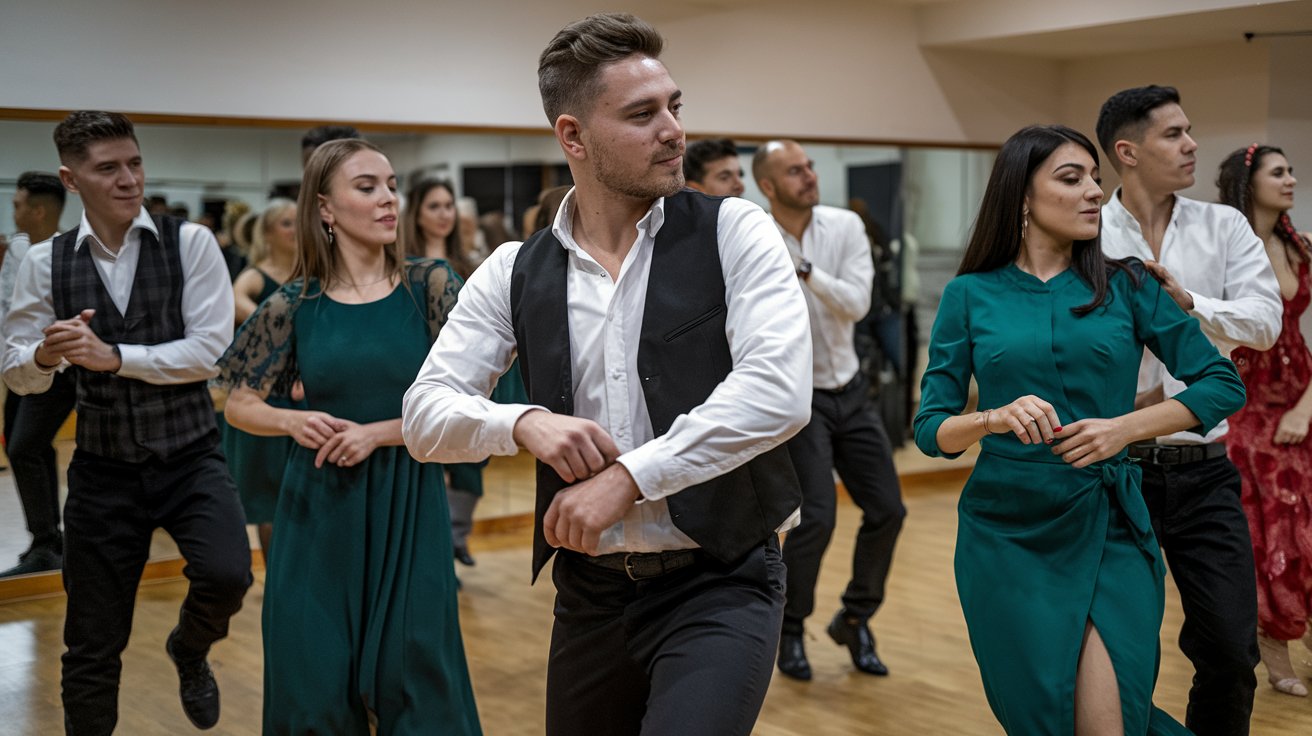
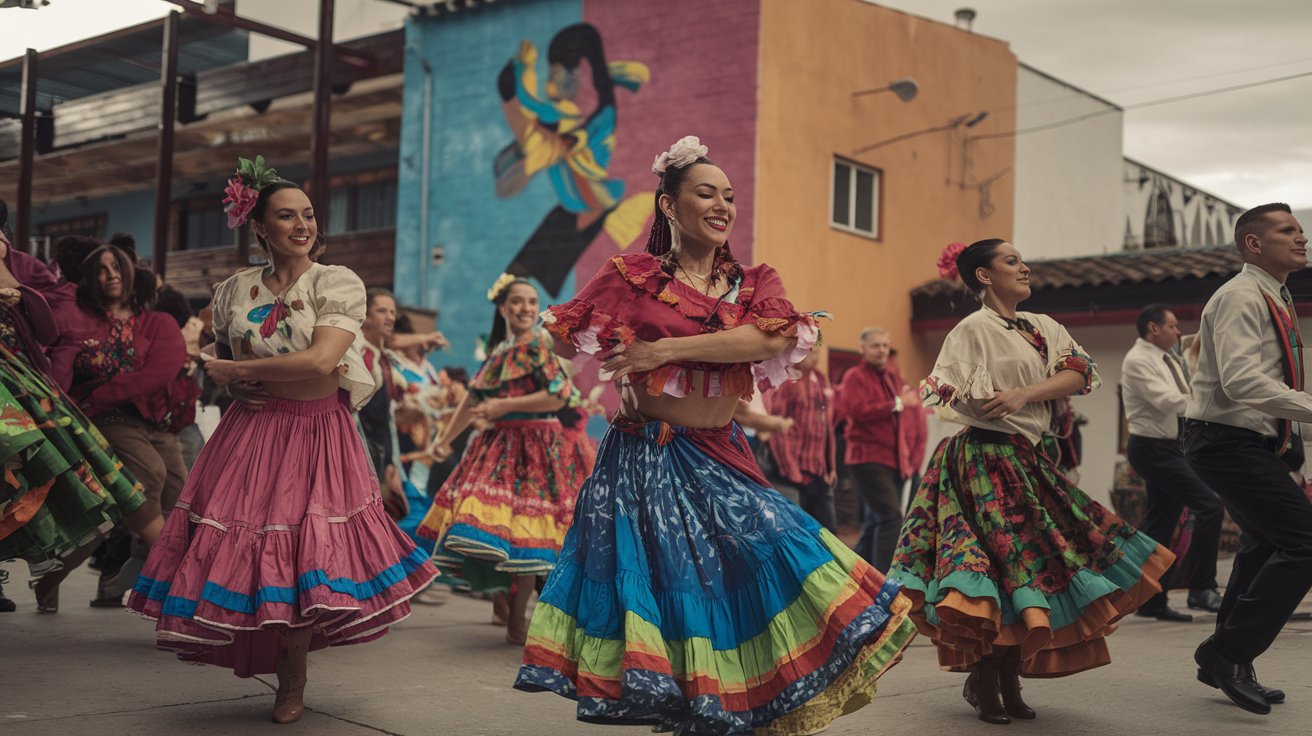
Traditional cumbia dance involves distinctive circular movements where couples dance around musicians or in large group circles. Women historically wore long, flowing skirts with colorful patterns and carried lit candles in their hands, creating visual spectacle during evening performances. Men wore white cotton clothing with red neckerchiefs and wide-brimmed hats, though modern cumbia dancers wear diverse styles. The dance steps feature a characteristic shuffle where dancers keep their feet close to the ground, swaying hips in rhythm with the percussion while maintaining an upright, dignified posture that reflects the dance’s cultural importance and ceremonial origins.
The cultural significance of cumbia extends beyond entertainment to represent resistance, identity, and community cohesion throughout Latin America. For Colombian coastal communities, cumbia symbolizes regional pride and connection to African and Indigenous heritage. In Mexico, cumbia became working-class music that provided dignity and joy to marginalized communities during economic hardships. Cumbia festivals throughout the United States in 2026 serve as cultural gathering spaces where Latino communities celebrate shared heritage across national boundaries. The dance’s accessibility—requiring no formal training while allowing individual expression—makes cumbia a democratic art form that welcomes all participants regardless of skill level or social status.
When Did Cumbia First Appear in History
Historical evidence suggests cumbia emerged during the 17th century in Colombia’s Caribbean coastal regions, though precise dating remains difficult due to limited written records about enslaved communities and Indigenous populations. Spanish colonial documents from the 1600s occasionally mention African dances and gatherings that likely included early cumbia forms, though colonizers rarely documented enslaved peoples’ cultural practices in detail. Oral traditions within Afro-Colombian communities trace cumbia back multiple generations before any written documentation, suggesting the genre may have originated as early as the late 1500s shortly after significant populations of enslaved Africans arrived in Colombia.
The first formal recordings of cumbia appeared in the 1940s when Colombian radio stations and record labels began documenting traditional music. Before this, cumbia existed purely as live performance tradition passed between generations through demonstration and participation. The genre’s evolution accelerated dramatically after recordings became available, allowing cumbia to spread beyond coastal regions to Colombia’s interior cities like Bogotá and Medellín. By the 1950s, cumbia had reached international audiences through touring musicians and radio broadcasts. Understanding this timeline helps explain why cumbia predates salsa by several centuries, with salsa developing in New York during the 1960s by combining Cuban son, Puerto Rican plena, and other Caribbean styles.
Modern Cumbia Evolution and Contemporary Artists
Contemporary cumbia in 2026 encompasses remarkable stylistic diversity, from electronic cumbia pioneered by artists like Bomba Estéreo to cumbia rap fusions created by Mexican and Chicano artists. Digital production techniques have revolutionized cumbia, with producers incorporating synthesizers, samplers, and electronic beats while maintaining the genre’s fundamental rhythmic structure. Los Ángeles Azules remain immensely popular, regularly selling out venues across the United States and collaborating with pop and hip-hop artists. Younger musicians like Gala Garrido and Las Áñez reinterpret traditional cumbia through feminist lenses, while groups like Chicano Batman incorporate cumbia influences into psychedelic rock frameworks.
The United States has become a major center for cumbia innovation as second and third-generation Latino musicians blend cumbia with hip-hop, R&B, and electronic dance music. Cities like Los Angeles host weekly cumbia nights attracting diverse audiences beyond Latino communities, with non-Latino dancers and musicians increasingly participating in cumbia culture. Streaming platforms report that cumbia playlists generate millions of plays monthly, with algorithms introducing the genre to listeners unfamiliar with Latin American music. Music festivals throughout the United States in 2026 regularly feature cumbia artists, recognizing the genre’s growing mainstream appeal and cultural significance. This evolution ensures cumbia remains relevant while honoring its African, Indigenous, and working-class roots.
Where Cumbia Is Most Popular Today
Colombia, Mexico, and Argentina represent cumbia’s strongest markets in 2026, with each nation maintaining distinct regional styles and massive fan bases. In Colombia, traditional cumbia remains deeply connected to national identity, with the government recognizing cumbia as intangible cultural heritage. Mexican cumbia dominates commercial radio across Mexico, with cumbia sonidera parties in Mexico City attracting thousands weekly. Argentina’s cumbia scene thrives in working-class neighborhoods where cumbia villera and cumbia santafesina provide soundtrack to daily life, with artists like L-Gante achieving mainstream success by 2026.
Within the United States, cumbia enjoys particular popularity in California, Texas, Illinois, and Florida, where large Latino populations support vibrant cumbia scenes. Los Angeles hosts numerous cumbia clubs and regular events like the massively attended Cumbia Bash. Houston’s cumbia community blends Mexican and Colombian influences, reflecting the city’s diverse Latino demographics. Chicago’s cumbia scene incorporates duranguense and other regional Mexican styles. Miami presents more Colombian-influenced cumbia alongside tropical music traditions. Beyond Latino communities, cumbia has gained appreciation among world music enthusiasts and younger multicultural audiences drawn to the genre’s infectious rhythms and danceable character, making cumbia one of Latin America’s most successful cultural exports in the contemporary United States.
Related video about where does cumbia come from
This video complements the article information with a practical visual demonstration.
Most asked questions about where does cumbia come from
Is cumbia Colombian or Mexican?
Cumbia is originally Colombian, having originated on Colombia’s Caribbean coast during the colonial period in the 17th century. However, Mexican musicians adopted cumbia in the mid-20th century and developed their own distinct style that became enormously popular throughout Mexico and the United States. Today, both Colombian traditional cumbia and Mexican cumbia represent important branches of the genre, each with unique instrumentation, tempo, and cultural significance. Colombian cumbia maintains closer ties to folk traditions with gaita flutes and traditional percussion, while Mexican cumbia typically features accordion, synthesizers, and faster tempos with brass or keyboard melodies.
What came first, salsa or cumbia?
Cumbia came first by approximately 300 years. Cumbia originated in Colombia during the 17th century (1600s) among enslaved African communities who blended their musical traditions with Indigenous Colombian instruments. Salsa, by contrast, developed in New York City during the 1960s and 1970s as Puerto Rican and Cuban musicians fused various Caribbean styles including Cuban son, mambo, and Puerto Rican plena. While both genres represent important Latin American musical traditions, cumbia has much deeper historical roots. This timeline explains why cumbia’s musical structure is simpler and more repetitive compared to salsa’s complex horn arrangements and intricate rhythms.
Did cumbia originate from slaves?
Yes, enslaved Africans were fundamental to cumbia’s creation. Cumbia originated among enslaved African communities brought to Colombia’s Caribbean coast during the 16th and 17th centuries. These communities maintained their West African drumming traditions and rhythmic patterns, combining them with Indigenous Colombian instruments like the gaita flute and Spanish melodic influences. The genre’s name likely derives from ‘cumbé’, a word from African Bantu languages. Cumbia represents a profound example of cultural resistance and preservation, as enslaved peoples used music to maintain cultural memory, communicate, and express identity despite oppression. The genre’s African heritage remains evident in its polyrhythmic percussion patterns, call-and-response structures, and dance movements.
What does cumbia mean in Spanish?
The word cumbia does not have a literal Spanish translation because it derives from African linguistic roots rather than Romance languages. Most scholars believe cumbia comes from ‘cumbé’, a Bantu language term referring to a type of dance or rhythm used by enslaved Africans in colonial Colombia. The word entered Spanish vocabulary specifically to describe this unique musical and dance style that had no European equivalent. In contemporary usage throughout Latin America and Spain, cumbia simply refers to the musical genre itself, functioning as a proper noun for this specific style of rhythm and dance. In English, the word is borrowed directly without translation, similar to terms like ‘salsa’ or ‘tango’.
Where is cumbia most popular in the United States?
Cumbia is most popular in California, Texas, Illinois, and Florida within the United States as of 2026. Los Angeles hosts the largest cumbia scene with numerous clubs, regular dance events, and festivals attracting thousands of participants. Houston’s cumbia community reflects diverse Latino populations with both Mexican and Colombian influences. Chicago features vibrant cumbia nights that often blend cumbia with duranguense and other regional Mexican styles. Miami presents more Colombian-influenced traditional cumbia alongside other Caribbean music. Beyond these major centers, cumbia enjoys growing popularity in cities with significant Latino populations including Phoenix, Las Vegas, Denver, and New York, with the genre increasingly attracting multicultural audiences beyond Latino communities.
How is cumbia different from other Latin dances?
Cumbia differs from other Latin dances through its characteristic shuffling footwork and circular formation patterns. Unlike salsa or bachata which involve partner work with spins and close connection, traditional cumbia features couples dancing in circles around musicians or in large group formations. Dancers keep their feet close to the ground with a distinctive shuffle step, swaying hips in rhythm while maintaining upright posture. Cumbia’s tempo is generally slower and more hypnotic than salsa, with simpler rhythmic patterns that emphasize groove over complexity. The dance requires no formal training and encourages individual expression within the communal circle, making it accessible to dancers of all skill levels. This democratic character distinguishes cumbia from more technically demanding Latin dance styles.
| Key Aspect | Important Details | Cultural Significance |
|---|---|---|
| Origin Location | Caribbean coast of Colombia, 17th century | Represents fusion of African, Indigenous, and Spanish cultures |
| Primary Creators | Enslaved African communities with Indigenous contributions | Symbol of cultural resistance and preservation |
| Traditional Instruments | Llamador, alegre, tambora drums, gaita flutes, maracas | Maintains connection to African and Indigenous heritage |
| Regional Variations | Colombian traditional, Mexican cumbia, Argentine cumbia villera, Peruvian chicha | Demonstrates genre’s adaptability across cultures |
| US Popularity Centers | Los Angeles, Houston, Chicago, Miami (2026) | Serves as cultural gathering point for Latino communities |
| Modern Evolution | Electronic cumbia, cumbia rap, fusion with pop and rock | Ensures continued relevance for new generations |